Who Is Responsible for Water Damage in a Condo in Florida?
In Florida, condo water damage responsibility falls on whoever owns the source of the leak, based on Florida Statute 718.111(11) and your association’s governing documents. The unit owner covers personal property and interior fixtures; the condo association covers common elements like roofs and shared plumbing. Negligence, not mere proximity, determines financial liability between neighbors.
The Short Answer Is Never Simple in Florida
Water damage in a Florida condo rarely has a clean, single answer about who pays. Two separate insurance policies, the association’s master policy and each owner’s HO-6 policy, divide responsibility along lines that shift depending entirely on where the leak started, what the governing documents say, and whether negligence played a role. A roof leak, a burst pipe inside a shared wall, and water dripping from the unit above can each trigger a completely different coverage answer. For Palm Beach County condo owners living in buildings that average over 30 years old, that ambiguity has real financial consequences.
When water moves fast, though, legal questions take a back seat to stopping the damage. That is where professional water damage restoration matters most. Understanding the legal landscape ahead of time means you can act immediately and sort out responsibility without losing critical drying hours.
What Florida Law Actually Says: Statute 718.111(11)
Florida Statute 718.111(11) is the foundational rule for condo insurance responsibility, and most condo owners have never read it. The statute says the association must insure the condominium property as it was originally installed, meaning the structure itself, the roofing system, exterior walls, and shared mechanical systems. Everything installed after the original construction, including floor coverings, wall and ceiling coverings, electrical fixtures, appliances, water heaters, built-in cabinets and countertops, and window treatments inside a unit, is the owner’s responsibility to insure and repair.
What that means practically: if a pipe inside a shared wall bursts and soaks your kitchen floor and your upstairs neighbor’s carpet, you are both potentially dealing with two separate insurance claims, two separate adjusters, and two separate liability questions, all from one event.
The Negligence Standard Florida Courts Apply
Florida does not impose strict liability for water originating from your unit. You are not automatically responsible simply because water traveled from your bathroom to the unit below. Liability depends on negligence: did you know about a leak and fail to fix it? Did you leave a bathtub running? Did you ignore your HVAC maintenance? If you did nothing wrong and a hidden pipe failed, you may not owe your neighbor anything, though your association’s master policy may still respond to structural damage.
A 2024 Florida appellate decision, McLlenan v. Cypress Chase North Condominium No. 4 Association, clarified that condo associations carry a non-delegable duty to repair common elements, even when water causing the damage originated from another unit. That ruling matters enormously for Palm Beach County owners in older buildings where aging shared plumbing is frequently the actual source of a loss.
The Three Parties Who Could Be Responsible
1. The Unit Owner (You)
You are responsible for your unit’s interior components and your own appliances. If your washing machine hose fails, your dishwasher supply line leaks, or your HVAC condensate line clogs and overflows, the resulting damage to your unit and any unit below is yours to address under your HO-6 policy. If negligence caused the leak, you may also be liable for your neighbor’s losses.
2. Another Unit Owner (Your Neighbor Above)
If water is dripping through your ceiling, the neighbor above you is not automatically on the hook. You must establish that they were negligent, that they knew or should have known about a problem and failed to act. If their plumbing failed without warning and they took immediate action, their liability may be limited. Their HO-6 policy carries liability coverage for exactly this scenario, and your own HO-6 policy should cover your interior losses under your dwelling coverage.
3. The Condo Association
The association is responsible for common elements: the roof, exterior walls, shared plumbing stacks, elevators, hallways, and the building’s original mechanical systems. If a roof leak, a failed shared pipe, or inadequate building maintenance caused your damage, the association’s master policy is the appropriate claim. Florida law makes that responsibility non-delegable, meaning the association cannot point to a third-party contractor and walk away from its duty to unit owners.
The Number One Cause of Condo Water Damage in Palm Beach County
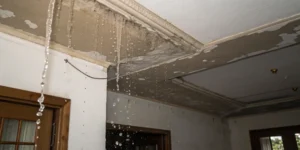
Ask any restoration contractor working in South Florida and they will tell you the same thing: AC condensate overflow is easily the most common water claim in Florida condos. Air conditioners in Palm Beach County run virtually year-round in the tropical heat. Condensate drain lines clog with algae and debris. Drain pans overflow. Water saturates the ceiling, the drywall, the insulation, and the flooring below before the unit owner notices anything at all.
This scenario is a responsibility gray area. The AC unit is typically the owner’s appliance, making the owner responsible for maintenance. But if the condensate line drains into shared building infrastructure that became blocked due to association neglect, responsibility shifts. Regular HVAC maintenance is not optional in Florida; it is a financial and legal necessity.
Typical restoration costs for an AC overflow event in South Florida range from $3,000 to $7,500 depending on how long the water sat and how many materials were affected. Florida’s humidity accelerates the timeline dramatically.
What Roof Leaks and Shared Plumbing Mean for Your Claim
Who Pays for Condo Water Damage from the Roof?
Roof maintenance and repair is a classic common element responsibility. If a storm, aging membrane, or inadequate flashing allowed water into your unit, the association’s master policy should respond. However, associations often push back, claim the roof is not covered under their policy for certain storm events, or argue the owner failed to report prior leaks. Document everything. Report leaks in writing. Photograph damage immediately.
According to FEMA’s flood insurance guidance, Palm Beach County residents should be aware that standard homeowner and condo master policies do not cover flood damage from rising water. A separate flood insurance policy, through the National Flood Insurance Program or a private carrier, is required for that coverage. Critically, 39% of Palm Beach County flood claims come from properties outside FEMA’s designated high-risk zones, meaning flood exposure affects far more owners than flood zone maps suggest.
Who Is Responsible for a Slab Leak in a Condo?
Slab leaks sit directly in the gray zone between unit owner and association responsibility. If the pipe serves only your unit, courts and policies typically assign responsibility to the owner. If the pipe is a shared supply or drain line that happens to run under your slab, the association generally bears responsibility. Florida’s governing documents vary by community, so the specific language in your Declaration of Condominium is the controlling document, not a general rule.
The SB 4-D Milestone Law: What Palm Beach County Owners Must Know
Florida’s SB 4-D milestone inspection law changed the landscape for aging condo buildings across Palm Beach County. Buildings three stories or taller that are 30 years old, or 25 years old within three miles of the coast, were required to complete a structural milestone inspection by December 31, 2024. A Structural Integrity Reserve Study was due by December 31, 2025.
Roughly two-thirds of Miami-Dade, Broward, and Palm Beach County condo buildings three stories or taller were built before 1990. For thousands of Palm Beach County owners, these inspections have revealed what building envelopes have been hiding for decades: chronic water intrusion, corroded rebar, failed waterproofing membranes, and saturated concrete. When these inspections trigger remediation, the question of who pays for resulting water damage documentation and restoration becomes urgent immediately.
The Florida Department of Business and Professional Regulation’s Chapter 718 statutes govern every aspect of this process, from milestone inspection deadlines to reserve funding requirements. Condo owners and associations navigating these disclosures should work with both legal counsel and licensed restoration professionals to properly document and remediate discovered water damage.
Restoration Costs in Palm Beach County: What to Expect
| Damage Level | Typical Florida Range | Common Causes in Palm Beach Condos |
|---|---|---|
| Minor (Class 1, clean water) | $500 to $1,500 | Small appliance leak, minor roof drip caught early |
| Moderate (single room) | $1,200 to $8,500 | AC overflow, toilet supply line failure, neighbor’s leak |
| Severe (multi-room or Category 3) | $10,000 to $25,000+ | Burst pipe, storm-driven flood intrusion, slab leak |
| AC Condensate Overflow | $3,000 to $7,500 | Clogged drain line, failed float switch, aging HVAC system |
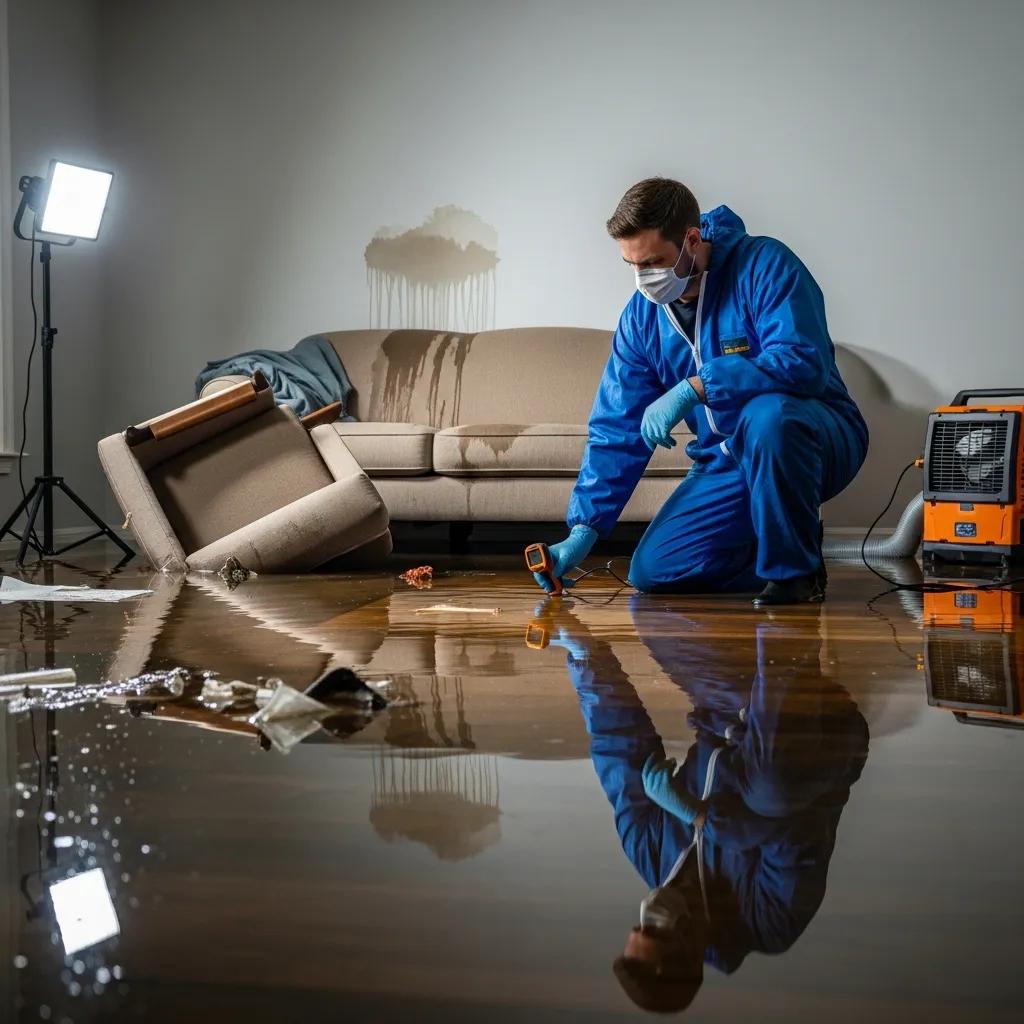
Florida’s year-round humidity extends drying time significantly compared to drier climates, adding equipment-day costs to nearly every job. The IICRC S500 Standard for Professional Water Damage Restoration governs the science behind drying timelines, moisture mapping, and category classification. Any restoration contractor working in Palm Beach County should follow this standard. Insurance adjusters know it. Your documentation should reflect it.
The Mold Clock Is Running: Why 24 to 48 Hours Is Everything
In Palm Beach County’s climate, mold begins colonizing wet drywall within 24 to 48 hours. What starts as a water damage claim becomes a mold remediation project if extraction and drying are delayed. Florida requires a separate DBPR license for mold assessment and mold remediation work. Once mold is present, costs escalate sharply, affected drywall must be removed, cabinets may need replacement, and airborne spores can migrate to adjacent rooms and units.
Calling a licensed restoration contractor immediately, before the association meeting, before the attorney call, before the insurance phone tree, is the single most important action a Palm Beach County condo owner can take after discovering water damage.
Can a Condo Association Charge Me for Its Insurance Deductible?
Yes, under certain conditions, Florida law permits associations to pass their master policy deductible through to a unit owner if the owner’s negligence caused the loss triggering the claim. This is an increasingly common provision in updated condo governing documents and can represent a significant out-of-pocket cost on master policies with high deductibles. Review your Declaration of Condominium for specific language on this point before assuming the association absorbs its own deductible.
What to Do Immediately After Discovering Water Damage in Your Florida Condo
- Stop the source. Shut off the water supply to your unit if the leak is from your plumbing or appliances. Contact your building’s maintenance if it involves shared systems.
- Document everything. Photograph and video the damage from multiple angles before moving anything. Timestamp your documentation.
- Notify in writing. Email your property manager and association board immediately. Written notice creates a legal record that protects you regardless of which party is ultimately responsible.
- Call a licensed restoration contractor. Do not wait for insurance authorization to begin extraction. Florida courts and insurance policies generally require prompt mitigation. Delay increases costs and shifts liability.
- File your claim. Contact your HO-6 insurer and let them know a loss occurred. Even if another party is responsible, your own policy may advance costs while subrogation is sorted out.
- Request permits for reconstruction. Palm Beach County Building Division requires permits for structural, electrical, mechanical, and plumbing reconstruction. Work with a licensed general contractor who can pull the appropriate permits.
Frequently Asked Questions
Who is responsible for a water leak in a condo in Florida?
Responsibility depends on the leak’s source and Florida Statute 718.111(11). The condo association covers common elements like roofs and shared pipes. Unit owners cover their interior fixtures and appliances. Liability between neighbors requires proving negligence, not just showing that water traveled from one unit to another.
Water damage from the condo above me: who pays in Florida?
Your upstairs neighbor is not automatically liable. You must show they were negligent, meaning they knew about a problem or caused it through their actions or inaction. Your own HO-6 policy should cover your interior losses while liability is determined. Document the damage immediately and notify both parties in writing.
Who pays for condo water damage from the roof in Florida?
Roof maintenance is a common element responsibility under Florida law, so the condo association’s master policy typically responds to roof leak damage. However, if the damage is flood-related from rising water, a separate flood insurance policy is required. Document all roof leaks in writing to the association as soon as they are discovered.
Can a Florida condo association charge me for its insurance deductible?
Yes. Florida law allows associations to pass their master policy deductible to a unit owner if that owner’s negligence triggered the claim. Many updated governing documents include this provision explicitly. Review your Declaration of Condominium carefully. Deductibles on association master policies can be substantial, sometimes exceeding $10,000 or more.
Who is responsible for drywall in a Florida condo after water damage?
Under Florida Statute 718.111(11), wall and ceiling coverings inside a unit are the owner’s responsibility. The association restores the drywall to its originally installed condition. Upgrades, custom finishes, and paint are the owner’s cost. Palm Beach County permits are required for reconstruction, and a licensed general contractor must pull structural permits.
How long do I have before mold becomes a problem after condo water damage in Florida?
In South Florida’s humidity, mold can begin colonizing wet drywall in as little as 24 to 48 hours. Immediate extraction and professional drying following the IICRC S500 standard are essential. Florida law requires a separate DBPR-licensed contractor for mold remediation. Delay converts a water claim into a significantly more expensive mold remediation project.
When water damage strikes your Palm Beach County condo, every hour matters more than any legal question. SuperClean Restoration Of The Palm Beaches LLC serves Palm Beach County with licensed, IICRC-certified water damage restoration, working directly with insurance adjusters, documenting losses to protect your claim, and completing the drying process before mold has a chance to take hold. Whether the association, your neighbor, or your own policy is ultimately responsible, the restoration work starts now.