Flood Damage Repair in Wellington, FL

24/7 emergency response for flood damage repair in Wellington, FL.

SuperClean Restoration Of The Palm Beaches LLC offers water damage restoration service in Wellington, Florida that handles flood damage repair for homes and businesses across Palm Beach County. We are a damage restoration company specializing in water and mold issues, offering cleanup and drying after canal backup, storm surge, and heavy rain flooding. Our crews extract standing water, decontaminate flood affected materials, dry the structure to certified standards, and rebuild what the water destroyed. One team, one documentation package, one certified closeout for your claim.

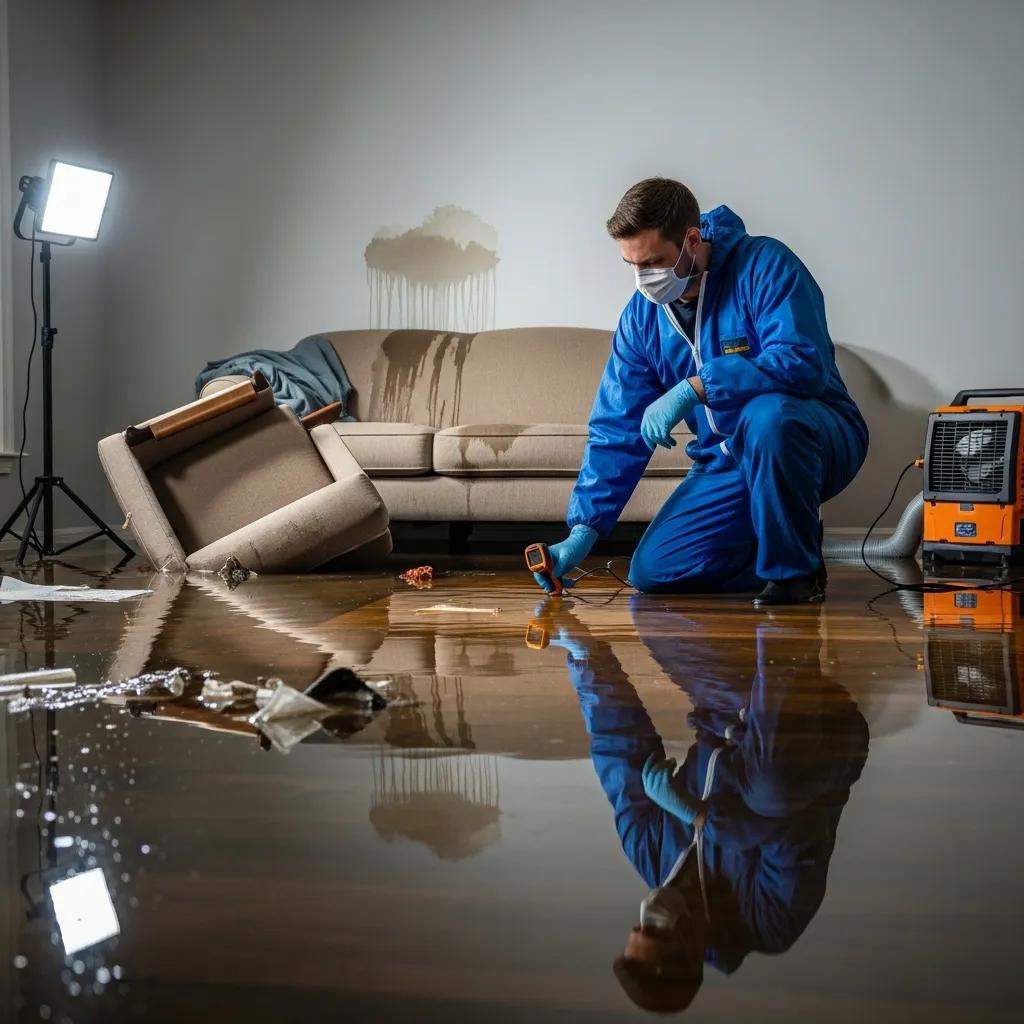
A cleanup worker in protective gear kneels on a wet, flooded floor, using equipment to assess damage. A tipped chair, damaged sofa, and cleanup lights are visible in the room.

Looking For Flood Damage Repair Near Me in Wellington?

Why Wellington Property Owners Call Us After a Flood

Flooding is not the same job as a broken supply line. Water that enters from outside carries soil, canal sediment, lawn chemicals, and sewage overflow, so it cannot be dried in place like clean water. It has to be removed, contained, and treated before anything gets dried. Most homeowners find that out after a franchise crew dries a floor that later has to be torn out.

Why Wellington Floods and What It Means for Your Property

Wellington sits low and flat in western Palm Beach County, and the whole village drains through a managed canal network rather than natural slope. When the wet season stacks afternoon storms on top of a tropical system between June and October, the canals fill faster than they discharge and water backs into yards, garages, and ground floor slabs across Sugar Pond Manor, Greenview Shores, and the equestrian properties off Big Blue Trace. The water table here is already high, so saturated soil pushes moisture back up through slab edges long after the yard looks clear. That is why flood damage in Wellington behaves differently than in most of the country. Surfaces dry while framing, subfloor, and the bottom of drywall stay wet at 25 to 30 percent moisture content, which is squarely inside the active mold range in an 80 percent humidity climate. SuperClean Restoration Of The Palm Beaches LLC uses truck mounted extraction for volume removal, FLIR thermal imaging to map how far the water migrated, LGR dehumidifiers calibrated for South Florida ambient humidity, and EPA registered antimicrobial on every Category 3 surface. We do not close a flood job on how it looks. We close it on moisture readings that meet IICRC S500 certified dryness.

How Our Wellington Flood Damage Repair Process Works

Every flood job follows the same documented sequence. The order matters, because drying a contaminated structure before it is decontaminated locks the contamination into the building.

Step 1: Emergency Response and Flood Assessment

We target arrival within 30 to 45 minutes anywhere in Wellington. On site we identify the water source, classify the category, and map how far the water traveled using FLIR thermal imaging. Wall cavities, subfloor, and slab edges get read before anything is touched. Every reading and photo goes into the file your adjuster receives.

Timeline: 1 to 2 hours from arrival.

Step 2: Containment and Standing Water Removal

For any flood that came in from outside, we set containment barriers before extraction so contaminated water is not tracked into dry parts of the property. Truck mounted units and submersible pumps then remove standing water from every affected area, including the low spots and cabinet voids that household equipment cannot reach.

Timeline: 2 to 6 hours depending on volume and square footage.

Step 3: Contaminated Material Removal and Antimicrobial Treatment

Porous materials that absorbed floodwater come out. That usually means carpet and padding, insulation, and drywall up to the flood cut line. Every remaining surface gets EPA registered antimicrobial treatment. This is the step franchises skip when they price a flood like a clean water job, and it is the step that decides whether you have a mold problem next month.

Timeline: 1 to 2 days depending on the affected area.

Step 4: Structural Drying to Certified Standards

LGR dehumidifiers and commercial air movers are positioned based on psychrometric calculations for Wellington ambient conditions, not a generic equipment count. We take moisture readings at fixed monitoring points daily and adjust placement as the numbers move. The drying phase ends when every point meets IICRC S500 certified dryness, not when the floor feels dry.

Timeline: 3 to 7 days for most residential flood events.

Step 5: Certified Clearance and Rebuild

You receive the full documentation package: initial readings, daily drying logs, final moisture data, equipment records, and the certified closeout. Then we rebuild. Drywall, trim, flooring, cabinet bases, and paint, handled by the same company that dried the structure.

Timeline: 2 days to several weeks depending on rebuild scope.
What To Do First After Flooding in Your Wellington Home

Do not walk into standing water if it is near outlets, the panel, or any powered appliance. Shut off electricity to the affected area at the breaker only if the panel is dry and reachable. Assume floodwater from outside is contaminated. Keep children and pets out of the affected rooms. Move documents, electronics, and anything with sentimental value to a dry upper area. Do not run household fans or a shop vac. In a contaminated flood event they spread bacteria through the air and cannot dry framing or subfloor. Photograph every affected room and every damaged item from a safe position before any cleanup starts. Call SuperClean Restoration at 844-888-0837 for 24/7 flood response.

SuperClean Restoration Of The Palm Beaches LLC targets on site arrival within 30 to 45 minutes for active flood events in Wellington, Royal Palm Beach, Loxahatchee, Greenacres, and the rest of Palm Beach County. We bring the pumps, the containment, the drying equipment, and the documentation your carrier is going to ask for.

Flood Damage Repair Services

Emergency Flood Water Extraction

Standing water pushes deeper into your subfloor every hour it sits. We arrive with truck mounted extraction units and submersible pumps sized for full house flooding, not for a wet carpet. Crawl spaces, under cabinet voids, and the low corners where floodwater collects get pumped out first. In Wellington we respond 24 hours a day because canal and drainage backup does not wait for business hours.

Floodwater Decontamination and Material Removal

Water that came in from outside is Category 3 under IICRC standards. It carries bacteria, canal sediment, fertilizer runoff, and anything that was in the storm drain. We set containment before we touch anything, remove porous materials that cannot be safely dried, and apply EPA registered antimicrobial to every affected surface. Saving wet drywall in South Florida is how a flood turns into a mold claim 30 days later.

Structural Drying After Flooding

Once the water and the contaminated materials are out, the building has to reach certified dry. We place LGR dehumidifiers and commercial air movers calibrated for Wellington humidity levels, then take moisture readings at fixed monitoring points every day until the structure meets IICRC S500 clearance. You get the daily logs. Your adjuster gets proof the job was finished, not guessed at.

Flood Damage Rebuild and Repairs

After the structure is certified dry, we put the property back. Drywall replacement from the flood cut line up, baseboards and trim, flooring, cabinet bases, and paint finishing. Because the same team handled extraction and drying, nothing gets rebuilt over moisture that was never resolved. Every repair line item is documented so it lands correctly in your claim.

Flood Water Categories in Wellington and What Each One Requires

Water damage in West Palm Beach follows predictable patterns based on the city’s distinct property types. Understanding your property’s risk profile helps confirm the right response.

Flood Source IICRC Category What Can Be Saved Required Protocol Typical Timeline
Clean rainwater entering through a window or door, no ground contact Category 1 Most flooring, drywall, and cabinetry if treated within 24 hours Extraction, structural drying, daily moisture monitoring 3 to 4 days to certified dry
Pool overflow or irrigation water entering the slab Category 2 Hard surfaces and framing. Carpet padding and soaked insulation removed Extraction, material removal, antimicrobial treatment, drying 4 to 6 days to certified dry
Canal or drainage backup, yard runoff, storm surge, street flooding Category 3 Framing, slab, and hard surfaces. Porous materials must be removed Containment first, contaminated removal, antimicrobial, then drying 5 to 8 days to certified dry, rebuild separate
Sewage backup during a flood event Category 3 Structural elements only after full decontamination Full containment, negative air, removal to the flood cut line, clearance testing 6 to 10 days to certified dry, rebuild separate
Any flood water left standing longer than 48 hours Category 3 by degradation Assume porous materials are lost. Mold assessment required Mold remediation protocol runs alongside flood restoration Extended. Scope confirmed after assessment

What Palm Beach County Customers Say About Our Flood Damage Repair

24/7 Emergency Flood Damage Repair in Wellington, FL

If water is in your property right now, do not wait for the morning. Every hour standing floodwater sits, more material becomes unsalvageable and the rebuild gets more expensive. SuperClean Restoration Of The Palm Beaches LLC  responds to active flood events across Wellington and Palm Beach County 24 hours a day with the pumps, containment, drying equipment, and documentation the job actually requires.

Frequently Asked Questions About Flood Damage Repair in West Palm Beach, FL

Flood damage repair runs in a fixed order. First the standing water is extracted with commercial pumps. Then contaminated porous materials are removed, usually carpet, padding, insulation, and drywall up to the flood cut line. Every remaining surface is treated with EPA registered antimicrobial. Only then does structural drying start, using LGR dehumidifiers and air movers until moisture readings meet IICRC S500 certified dryness. Rebuild is the last step: drywall, trim, flooring, and paint. Skipping the decontamination step and going straight to drying is the most common failure we are called in to correct.

Flood damage repair in Wellington typically runs from $3,000 to $12,000 for a residential event, and the range is wider than clean water jobs because flooding is almost always Category 3. Cost is driven by how many square feet took water, how long it sat, how much porous material has to be removed, and how much rebuild is needed after drying. Events that sat longer than 48 hours or involved sewage carry higher costs because of contamination handling and mold remediation. We provide a documented scope and estimate before work begins and coordinate directly with your adjuster.

Wet drywall in a flood event is not dried in place. Because floodwater is contaminated and gypsum wicks moisture upward, we cut the drywall along a flood cut line above the visible water mark, usually 12 to 24 inches above the floor. Insulation behind it comes out with it. The exposed framing and bottom plate are then decontaminated, dried, and verified with moisture meters before new drywall goes up. Closing a wall over wet framing is what produces mold inside a cavity where nobody sees it for months.

Usually not. Standard Florida homeowners policies cover sudden internal water damage such as a burst pipe, but rising water entering from outside is generally excluded and requires a separate National Flood Insurance Program policy or private flood coverage. There are gray areas, for example wind driven rain entering through a storm damaged roof, which often falls under the homeowners policy instead. We document the water source, the entry point, and the affected areas so your adjuster can classify the loss correctly, and we work with both NFIP and carrier adjusters.

Mold can begin activating within 24 to 48 hours of a flood event in Palm Beach County’s subtropical climate, and contaminated floodwater accelerates it because it introduces organic material into the structure. Wall cavities and subfloors hold moisture far longer than the surfaces you can see. This is why we start containment and extraction the same day and why we verify dryness with meters instead of appearance. If mold is already present when we assess the property, we run a mold remediation protocol alongside the flood restoration.

Not safely, if the water came from outside. Floodwater in Wellington carries canal sediment, lawn chemicals, and often sewage overflow, which makes it a Category 3 contamination event under IICRC standards. Household fans and shop vacs aerosolize contaminated water and do not have the capacity to dry framing or subfloor. A floor that feels dry after a weekend of fans can still hold 25 to 30 percent moisture inside the structure. That is the exact range where mold colonizes, and it turns a flood cleanup into a rebuild.

Flood Damage Repair Service Area in Palm Beach County, FL

We dispatch from Wellington, which puts our crews inside the western Palm Beach County corridor where drainage flooding hits hardest. Response runs from the Acreage and Loxahatchee east to the coast, covering Forest Hill Boulevard, Southern Boulevard, State Road 7, and everything between.

Northwood Historic District | El Cid
Flamingo Park | Coleman Park
Grandview Heights | Prospect Park
Downtown West Palm Beach | CityPlace / The Square
Palm Beach Lakes | Pleasant City
Westgate | Greenacres border area
45th Street corridor | Okeechobee Boulevard corridor
Flagler Drive waterfront | Lake Avenue district
Lake Worth Lagoon area | Palm Beach International Airport vicinity
SunFest venue area | Dreher Park neighborhood
Ibis Golf and Country Club | Haverhill corridor