Why Commercial Water Damage Requires Immediate Professional Action
Commercial water damage isn’t like a small residential leak you can address over the weekend. When water intrudes into your office building, retail space, warehouse, or industrial facility, it threatens your entire operation within hours. We’ve responded to countless situations where business owners underestimated the scope of the problem, thinking a mop and some fans would suffice.
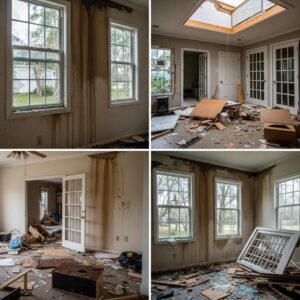
Water damages far more than what’s immediately visible. It weakens structural materials, compromises electrical systems, creates slip hazards, and triggers mold growth in hidden cavities. Your inventory, equipment, and documents face destruction. Most critically, your liability exposure climbs sharply if employees or customers suffer injury or if contaminated water poses health risks.
Professional action matters because we understand what’s at stake. We arrive with industrial-grade equipment, trained technicians, and a clear assessment protocol. Within the first 24 to 48 hours, we identify the water source, extract standing water, and begin drying before secondary damage develops. Our approach prevents the cascade of problems that turns a manageable incident into a catastrophic loss.
What to do next: Don’t wait for water to “dry on its own.” Call us immediately at the first sign of commercial water damage, even if it seems minor. Early intervention saves thousands in remediation costs and prevents business closure.
The Hidden Costs of Delayed Water Damage Response
Many business owners focus only on the visible repair bill, but delayed response creates expenses that dwarf initial restoration costs. We’ve documented situations where a $5,000 water extraction job became a $50,000 project because the owner waited three days before calling for help.
Here’s what happens when response is delayed:
Structural materials absorb moisture and begin deteriorating. Drywall crumbles, wood studs rot, and concrete weakens. Mold colonies establish themselves throughout walls, HVAC systems, and ductwork. Once mold colonies mature, remediation requires containment, specialized removal, and often reconstruction of affected areas. Electrical systems corrode, creating fire hazards and requiring panel replacement. Carpet and flooring absorb contaminated water and must be discarded rather than salvaged.
The business interruption cost often exceeds physical restoration expenses. If your commercial space is uninhabitable, you’re losing revenue, failing to serve customers, and potentially breaching client contracts. Extended closure damages reputation and customer loyalty in ways that are hard to quantify but deeply felt.
We’ve also seen delayed response trigger disputes with insurance carriers. Documentation becomes murkier, causation harder to prove, and insurers may deny claims they would otherwise cover. Our immediate response creates a clear timeline and photographic record that protects your claim.
Actionable takeaway: Calculate your daily revenue loss, then compare that figure to emergency restoration costs. The math almost always favors immediate professional response.
Our 24/7 Emergency Response Advantage
We maintain a 24/7 response team specifically because water damage doesn’t respect business hours. That pipe burst at midnight on Saturday. That roof leak occurred during a holiday weekend. That storm surge happened at 3 a.m. when your property was unmanned. We’re available whenever disaster strikes.
When you call us, you’re not joining a queue. Our dispatch system immediately identifies available crews near your location and coordinates a rapid deployment. Because we serve Palm Beach County comprehensively, we typically arrive within 60 to 90 minutes of your call. That speed matters enormously because every hour of standing water increases secondary damage.
Our emergency teams carry complete equipment loads, so they begin work immediately without waiting for specialized gear to be delivered. They extract water, open walls for inspection, set up dehumidifiers and air movers, and establish a drying protocol on the same day you call. This isn’t a preliminary assessment followed by a callback—it’s substantive action.
We also field calls from insurance companies and property managers who’ve learned that our rapid response protects their assets and minimizes claim costs. When your insurer recommends immediate professional restoration, they’re often thinking of us because our track record demonstrates that speed plus expertise reduces total loss.
Next step: Save our number in your phone now, before an emergency occurs. Having us readily available means you’ll actually call immediately instead of trying to handle initial response yourself.
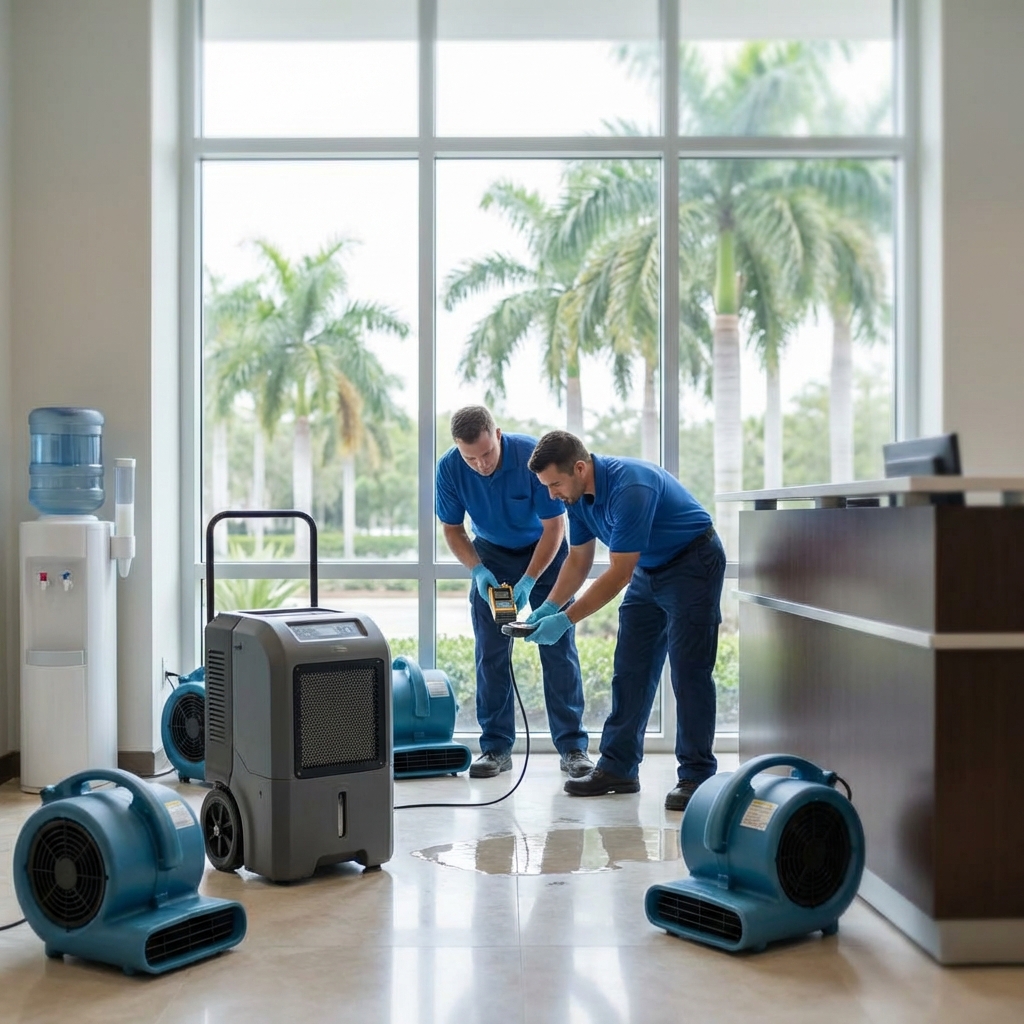
Comprehensive Water Extraction and Structural Drying
Water extraction is both science and craft. We don’t simply pump out standing water and leave. Our extraction process removes water from flooring systems, substructures, and material interiors where standing water won’t drain naturally.
We deploy multiple extraction technologies suited to your specific situation. For large open areas, truck-mounted extraction systems remove thousands of gallons per hour. For detailed or sensitive spaces, portable extractors allow precise control. We also use moisture-sensing equipment to identify water trapped in materials, and then employ specialized techniques to remove it rather than let it linger and cause damage.
After extraction, structural drying begins immediately. We position industrial dehumidifiers to condition the air and remove moisture vapor, then place air movers to circulate that dry air across all surfaces. For commercial spaces, we often create temporary containment zones so your operation can continue in unaffected areas while we restore damaged sections.
Our drying process typically includes monitoring moisture levels in materials using moisture meters and thermal imaging. We track this data daily and adjust equipment placement as conditions change. This systematic approach prevents over-drying (which damages materials) and under-drying (which allows mold growth).
Different materials require different drying timelines. Concrete may dry in five to seven days, while structural lumber requires two to three weeks. We establish realistic timelines upfront based on material types, humidity levels, and ambient conditions so you’re not blindsided by unexpected delays.
Practical takeaway: Ask any restoration company for their drying timeline and monitoring methodology. Vague answers signal inexperience; specific protocols backed by daily data indicate professionalism.
Mold Prevention and Remediation for Commercial Properties
Mold isn’t just an appearance issue or minor health concern. Commercial mold growth can trigger liability claims, force facility closure, and create long-term health consequences for employees. We prevent mold aggressively because prevention is exponentially cheaper than remediation.
Our mold prevention strategy begins during the extraction and drying phase. We work faster and more thoroughly than minimum standards require, because we know that keeping moisture levels below 50% relative humidity within 48 hours prevents most mold germination. We document this process with moisture readings and photographic evidence.
If mold has already begun growing, our remediation approach depends on contamination scope. For small isolated areas, we contain the space, remove affected materials, and apply antimicrobial treatments. For extensive contamination, we establish full containment barriers, HEPA-filter the air to prevent spore spread, and professionally remove and dispose of all contaminated materials according to EPA guidelines.
We also address mold-prone hidden spaces. HVAC systems frequently harbor mold after water events. We inspect and clean ductwork, replace compromised filters, and treat condensation surfaces. We check wall cavities behind drywall and crawl spaces under flooring. These hidden areas are where mold growth becomes chronic problems if overlooked.
Our mold remediation includes testing to verify that remediation is complete. We test before and after so you have documentation that your property is mold-free. This documentation is crucial for employee health, insurance documentation, and future liability protection.
Action item: If you suspect mold anywhere in your commercial property, request professional mold testing before attempting any cleanup. Improper removal techniques spread spores and worsen the problem.
Insurance Claims Support and Documentation
We navigate insurance claims alongside you because we understand how insurers evaluate water damage claims. Our documentation practices are designed to support approval rather than trigger denials.
From day one, we photograph and document everything. We capture the water source, affected areas, material conditions, and our mitigation actions with time-stamped images. We record moisture readings, track equipment placement, and maintain logs of all work performed. When your insurance adjuster arrives, we provide detailed reports that establish clear causation and demonstrate appropriate response.
We also understand coverage nuances that catch many property owners off-guard. Some policies cover water from broken pipes but not water backup from failed sump pumps. Coverage varies based on whether damage resulted from maintenance failures or sudden unexpected events. We’ve learned these distinctions and help you understand what your policy likely covers before you contact your insurer.

We communicate with adjusters professionally and provide whatever documentation they request promptly. We’ve built relationships with most major insurers in Palm Beach County, so adjusters often trust our assessments and timelines. This mutual professional respect accelerates claim resolution.
Many of our clients are stunned to discover that their restoration costs are covered in full because we documented the damage and response so thoroughly. Conversely, we’ve also helped clients understand when coverage limitations apply, so they’re not shocked when the final bill arrives.
Practical step: Don’t delay reporting to your insurer, but do call us first so we can brief you on what to expect. Our guidance helps you report accurately and completely, which prevents claim complications.
Specialized Hurricane and Storm Damage Recovery
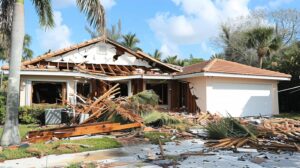
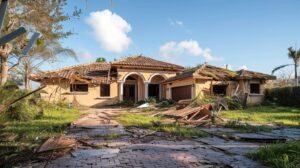
Palm Beach County residents know that hurricane season brings genuine risk. Storm surge, wind-driven rain, fallen trees, and flying debris create water intrusion scenarios unlike typical pipe failures or roof leaks. We specialize in storm damage recovery because our climate demands it.
Hurricane water damage often combines multiple hazards. Storm surge carries contaminated water laden with salt, sewage, and debris. Wind-driven rain penetrates building envelopes in ways that create water intrusion in spaces that seem protected. Trees collapse through roofs and walls, creating massive open areas where rain enters freely.
Our hurricane response teams are trained to prioritize life safety and property stabilization before restoration begins. We secure open building envelopes with tarping and temporary coverings. We extract standing water aggressively. We begin structure drying knowing that humid post-storm conditions accelerate mold growth.
We also understand wind damage dynamics. We inspect roof systems, wall cavities, and HVAC penetrations for hidden wind damage that allows water to enter even after primary water extraction is complete. We look for nail pops, membrane separation, and insulation compression that indicates wind-driven rain intrusion.
Storm damage documentation is especially important for insurance claims because carriers scrutinize hurricane claims heavily. We photograph wind damage patterns, document water intrusion pathways, and create detailed reports that help adjusters understand how much wind versus water damage occurred. Our photographic evidence often prevents coverage disputes.
Next step: If storm damage has affected your property, call us immediately. The sooner we stabilize and dry your structure, the better we can document the original damage before secondary issues develop.
Minimizing Business Interruption During Restoration
The true cost of water damage is measured in lost business, not just repair bills. We structure our restoration work specifically to minimize your downtime and operational disruption.
For many commercial spaces, we create phased restoration plans. We identify critical areas your business absolutely needs to function, and we prioritize those zones for extraction, drying, and return to service first. While we complete detailed restoration elsewhere in your facility, you’re operating from your core spaces.
We also coordinate timing strategically. If you operate during business hours, we accelerate evening and weekend work in your restoration areas. If you operate 24/7, we plan restoration zones that don’t interfere with your operational zones. We work around your business schedule rather than forcing your business around our work schedule.
For retail, office, and service businesses, reopening quickly is essential for survival. We’ve had clients reopen partial operations within 48 to 72 hours of water damage because we focused initial effort there. Full restoration continued for weeks, but the business was generating revenue again, which changes everything financially.
We also manage noise, dust, and access disruption carefully. We use negative pressure systems to contain construction dust. We schedule noisy dehumidification equipment in unoccupied areas. We keep restoration zones cleanly contained so your customers and employees notice minimal disruption.
Actionable consideration: When you call us, share your business operation details so we can tailor our restoration schedule to your specific needs rather than applying a one-size-fits-all approach.
How We Restore Your Property to Pre-Loss Condition

“Pre-loss condition” means your property looks and functions exactly as it did before the water damage occurred. This isn’t just cleaning and patching; it’s comprehensive restoration that addresses every system affected by water intrusion.
Our restoration process begins with comprehensive assessment. We inspect structural systems, electrical infrastructure, HVAC systems, flooring, walls, ceilings, and contents. We identify not just obvious damage but also subtle deterioration that will worsen without intervention. We document findings with photographs and detailed reports.
We then develop a restoration sequence that’s logical and efficient. For example, we might address structural drying first, then electrical system restoration, then wall and ceiling restoration, and finally finishing work. This sequence prevents rework and protects against moisture reintroduction.
Material replacement is meticulous and proper. If drywall is damaged, we don’t just patch the visible area; we replace full sections to maintain structural integrity and finish quality. If flooring is compromised, we remove and replace, not just refinish over damage. We use materials matching your original construction so the restored areas are indistinguishable from the original.
We also address systems that are difficult to assess but critical to restoration. After water damage, electrical outlets, switches, and panels may have compromised insulation or corroded connections. We have these inspected by licensed electricians. HVAC systems need professional cleaning and inspection. Plumbing systems may need flushing to remove contamination.
Our goal is genuine restoration, not temporary fixes. You shouldn’t discover hidden problems six months later because we cut corners to speed up timeline or reduce costs.
What this means for you: Ask potential restoration companies about their approach to electrical and mechanical systems. Comprehensive restoration includes professional inspection of these critical systems, not just water-damaged visible surfaces.
Getting Your Business Operational Again
The final stage of restoration is returning your business to full operational capability. This includes not just physical restoration but also verification that systems function properly and your business can operate safely.
We coordinate with utility companies for system restoration. After water damage, electrical systems need professional inspection and often panel replacement before reconnection. Natural gas lines may need clearing and testing. Water systems need flushing and testing for contamination. We manage these utility interactions so reconnection happens smoothly.
We also ensure your business can operate safely. We verify that electrical systems function properly, HVAC systems are clean and operational, fire suppression systems are functional, and any equipment that contacted water is professionally serviced or replaced. We don’t just dry things and hope they work.
For businesses with clients or customers, we help manage communication about the restoration. We can provide documentation that your facility has been professionally restored, that mold remediation is complete, and that systems are operational. This documentation helps reassure clients that you’re ready to serve them again.
We also provide guidance on preventive measures to reduce future risk. If the water damage resulted from a failed sump pump, we recommend system upgrades. If it resulted from roof leaks, we suggest inspections and maintenance intervals. If it resulted from plumbing failures, we recommend water detection systems or shut-off valves.
Final actionable step: Schedule your operational return as a formal milestone. Have us walk through your facility, verify system functionality, and provide written documentation of restoration completion. This formal close-out protects you and gives your team confidence that everything is genuinely restored.
—
Water damage in commercial properties is serious because your business depends on a functioning facility. When damage occurs, speed and professional expertise aren’t luxuries; they’re necessities. We provide both, combined with the documentation and insurance navigation that protects your interests throughout recovery.
If your Palm Beach County commercial property has experienced water damage, contact us immediately. Our 24/7 response team is standing by, and our track record demonstrates that rapid professional intervention saves money and keeps your business operational during recovery.
For further reading: Water damage restoration.