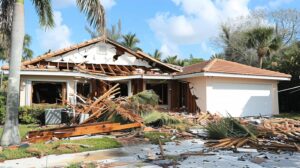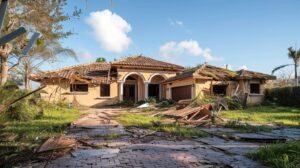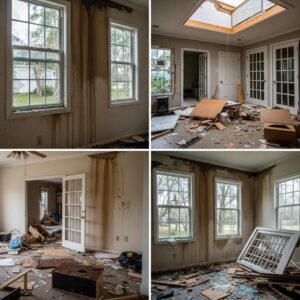
Immediate Roof Inspections and Assessment
Roof leaks are one of the most destructive problems we encounter in Palm Beach County. Water doesn’t just drip into your attic—it spreads through walls, saturates insulation, compromises structural integrity, and creates the perfect environment for mold. Within 24 to 48 hours, a single leak can cause damage that takes weeks and thousands of dollars to properly remediate.
We’ve responded to hundreds of roof leak emergencies across residential and commercial properties. What we’ve learned is that speed, precision, and a comprehensive approach separate effective repairs from incomplete fixes that leave hidden damage behind. This guide covers the eight critical steps we follow to address roof leaks, stop water intrusion, and restore your property.
The moment you notice a leak—whether it’s a water stain on your ceiling or visible dripping during a storm—time matters. Our first action is always a thorough roof inspection to locate the source and understand the scope of water penetration.
We don’t rely on guesswork. Our team uses moisture mapping technology and thermal imaging to see where water has actually traveled inside your walls and attic. A leak visible in one room might originate 15 feet away where flashing is damaged or where the roof was improperly installed around a chimney or vent.
During assessment, we identify:
- The primary leak source and any secondary entry points
- How far water has traveled through your structure
- Which materials are saturated and need removal or drying
- Whether structural framing is compromised
- Signs of existing mold growth
We also document everything with photos and detailed notes. This documentation becomes essential later when filing insurance claims. Many property owners try to patch a leak themselves or call a general contractor, only to discover weeks later that hidden damage spread throughout the attic and walls. By that point, the job becomes exponentially more expensive.
Your next move: Don’t wait for the next rain to confirm a leak. Call us for an inspection as soon as you notice water intrusion. Early detection prevents exponential damage and keeps repair costs manageable.
Emergency Water Extraction and Removal
Once we understand the leak location and water distribution, we move to extraction. Standing water or heavily saturated materials are extracted using industrial equipment, not shop vacs.
We deploy:
- High-capacity truck-mounted extraction systems that remove water from materials, cavities, and surfaces
- Submersible pumps for basement or crawlspace flooding caused by roof leaks that have drained downward
- Targeted removal of saturated drywall, insulation, and flooring that cannot be dried in place
- Careful documentation of all removed materials for insurance purposes
The goal isn’t just to remove visible water—it’s to extract water from within materials before it causes permanent damage. Wet insulation loses its R-value and becomes a vector for mold. Saturated drywall creates structural weakness and mold habitat. We don’t leave these materials sitting; we remove them promptly.
For commercial properties, water extraction is even more critical. A roof leak in a warehouse or office building can damage inventory, equipment, and critical infrastructure. Our 24/7 response ensures we’re extracting water within hours, not days.
Your next move: Have us assess whether extracted materials need replacement or if structural drying can salvage them. This decision directly affects your final repair cost.

Structural Drying and Dehumidification
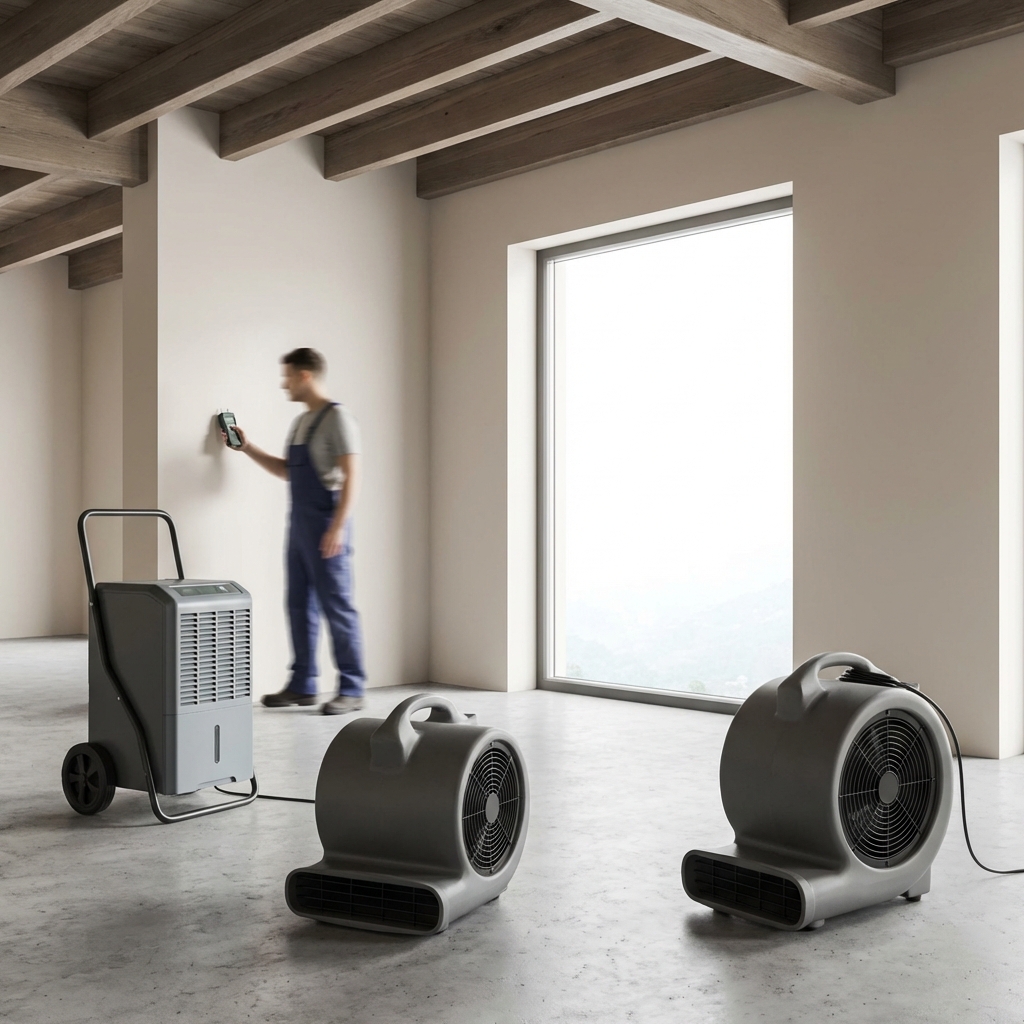
After extraction, aggressive drying prevents mold and further deterioration. We deploy multiple high-capacity dehumidifiers and air movers throughout affected areas to evaporate remaining moisture from framing, subflooring, and cavities.
Drying is science, not guesswork. We use moisture meters to track progress in wood framing, concrete, and other materials. Different materials dry at different rates—hardwood dries slower than softwood, and concrete is notoriously slow. We adjust equipment placement and run duration based on actual moisture readings, not assumptions.
For attic leaks, we typically:
- Dry the attic space and any rafters or trusses affected by water
- Monitor moisture levels in insulation and roof decking
- Run dehumidifiers and air movers for 3 to 7 days depending on saturation level
- Test daily to confirm moisture is dropping toward acceptable levels (typically below 15% moisture content in wood)
Improper drying creates the conditions where mold thrives. A property that’s “dried” with insufficient airflow often develops visible mold within 10 days. Our approach ensures moisture is actually removed from materials, not just evaporated from surfaces.
Your next move: Don’t assume a room feels dry means it’s truly dry. We’ll provide moisture readings as evidence that drying is complete before we move to the next phase.
Mold Prevention and Remediation
When a roof leak persists for more than a few hours, mold growth is not a matter of if but when. We treat mold prevention as a critical phase of the restoration process, not an afterthought.
Our protocol includes:
- HEPA filtration during all water removal and drying to prevent mold spores from spreading to unaffected areas
- Antifungal treatment applied to all materials that were wet but are being retained (non-porous surfaces, some framing)
- Removal of any materials showing active mold growth (typically porous items like insulation, drywall, and wood)
- Post-remediation mold testing to verify spore counts have returned to normal
We’re careful to distinguish between materials that can be treated and those that must be removed. Fiberglass insulation contaminated by roof leak water should always be removed and replaced—it cannot be effectively cleaned. Wooden framing can often be retained if treated promptly and dried completely.
If we discover active mold during assessment, remediation becomes part of the immediate response. We isolate the affected area, contain spores using negative pressure and plastic sheeting, and remove contaminated materials safely. This is not a DIY job. Improper mold remediation spreads spores throughout your home and exposes residents to health risks.
Your next move: Ask us to include mold testing in your scope. This gives you documentation for insurance and proof that the environment is safe for reoccupancy.
Ceiling and Interior Water Damage Restoration
Water that enters through a roof leak typically damages the first surfaces it encounters: attic insulation, roof decking, and the ceiling below. Once we’ve addressed the leak source, extracted water, and managed mold, we restore these surfaces.
Interior restoration includes:
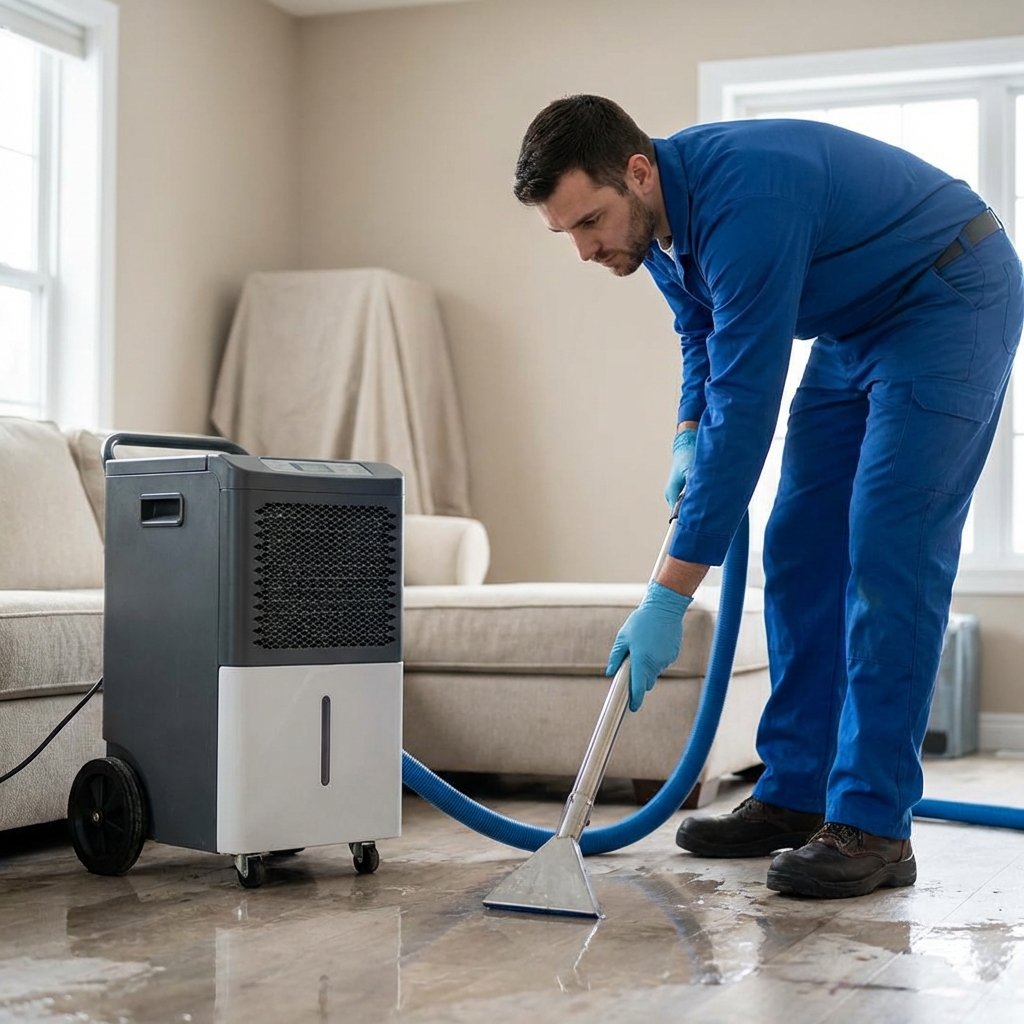
- Removal and replacement of wet insulation
- Repair or replacement of damaged drywall ceilings
- Painting and finishing to match existing surfaces
- Restoration of trim, fixtures, and any built-in components
The challenge here is matching finishes. A ceiling damaged by a roof leak needs more than just new drywall and paint—it needs to blend seamlessly with surrounding materials. We track paint colors, ceiling textures, and trim profiles so your repair doesn’t look like a patch job.
For commercial properties, we’re mindful of business continuity. We schedule interior restoration to minimize disruption, work after hours when possible, and coordinate with your facility team to ensure critical systems aren’t impacted during repairs.
The worst scenario we see is property owners rushing to patch a ceiling with quick-fix materials before the underlying structural damage is fully addressed. This leads to recurring leaks, mold returning within weeks, and eventual ceiling collapse. Interior restoration happens only after the roof is repaired and drying is complete.
Your next move: Have us provide a detailed scope showing exactly what will be repaired, replaced, or restored. This clarity prevents misunderstandings and keeps projects on track.
Roof Repair and Replacement Solutions
Fixing the leak source is the foundation of everything else. If the roof isn’t repaired, water will continue to intrude and undo all the restoration work we’ve completed.
Roof repairs vary widely depending on what caused the leak:
- Flashing failures: Damaged flashing around chimneys, vents, skylights, or roof penetrations accounts for roughly 30% of roof leaks we see. Re-flashing typically costs 500 to 1,500 dollars.
- Missing or damaged shingles: Storms, age, and wind damage create gaps in your roof. Shingle replacement and patching is the most common repair, often 300 to 800 dollars.
- Roof deterioration: Older roofs (15 to 20 years) may have multiple small leaks that make repair uneconomical. Full replacement becomes the better long-term investment.
- Punctures or tears: Fallen branches, foot traffic, or installation damage can puncture roofing material. Sealing and patching stops the leak short-term, but a full replacement may be recommended if the roof is already aging.
We evaluate your roof’s age, condition, and remaining lifespan before recommending repair versus replacement. If your roof is 10 years into a 20-year lifespan and the leak is isolated, repair makes sense. If your roof is 18 years old and showing signs of deterioration across multiple areas, replacement prevents recurring emergencies.
For replacement, we coordinate with qualified roofing contractors to install compliant, warrantied systems. We ensure the new roof includes proper flashing, ventilation, and underlayment to prevent future leaks.
Your next move: Ask us whether your roof is repairable or should be replaced. This conversation often saves property owners money by preventing repeated repairs that add up to more than a full roof replacement.
Insurance Claims Assistance and Documentation
Most roof leak damage qualifies for homeowners or commercial property insurance coverage. However, filing a claim successfully requires thorough documentation and clear communication with your insurer.
We handle:
- Detailed damage assessment reports with photos and moisture readings
- Itemized lists of all materials removed and repairs needed
- Estimates for all restoration work
- Timeline documentation showing when damage occurred and when we responded
- Communication with adjusters and insurance representatives
Having a restoration professional managing this documentation significantly improves claim approval rates and settlement amounts. Insurance companies have seen countless cases where insufficient documentation led to claim denials or low settlements. We’ve learned what adjusters need to see and how to present information clearly.
We also work directly with adjusters during inspections. If an adjuster underestimates damage or recommends insufficient repairs, we provide technical input based on our assessment and industry standards. This isn’t confrontational—it’s collaborative communication that ensures insurance covers what actually needs to be fixed.
For commercial properties, this process is even more complex. We prepare detailed scope documents, coordinate with facility managers, and ensure all work aligns with insurance policy requirements and building codes.
Your next move: Contact your insurance company as soon as the roof leak occurs. Have us provide our detailed assessment to your adjuster. Don’t settle on a claim payout until you’ve reviewed our recommendations for necessary repairs.
Our 24/7 Emergency Response Advantage
Roof leaks don’t wait for business hours. A storm that damages your roof at 2 a.m. on a Saturday doesn’t care that most restoration companies are closed. Water continues penetrating your structure every second the leak remains unaddressed.
We maintain 24/7 emergency response specifically because roof leaks are time-critical. When you call, a real person answers—not an answering service or voicemail. We dispatch a crew within the hour, arrive equipped for immediate water extraction and emergency tarping, and begin assessment and mitigation while the damage is still fresh.
Our immediate actions during a 24/7 callout include:
- Emergency tarping or sheeting to stop further water intrusion
- Rapid water extraction from attic, walls, and living spaces
- Initial assessment to understand scope and communicate with your insurance company
- Mobilization of drying equipment to begin moisture control immediately
This rapid response prevents the compounding damage that occurs during the first 24 to 48 hours. A roof leak that’s addressed within hours causes significantly less damage than one that’s ignored until Monday morning. We’ve seen the difference in outcomes, and it’s substantial.
Beyond emergency response, we’re fully equipped to manage the entire restoration process from leak source through final interior restoration. You’re not coordinating between multiple contractors—you’re working with one team that takes ownership of the entire project.
We understand that roof leak damage is stressful. Properties are compromised, insurance processes are complex, and the cost of repairs is significant. Our role is to manage this process professionally, transparently, and efficiently so you can focus on your family or business while we handle the restoration.
Your next move: Save our number now. When a roof leak occurs, call us immediately—don’t wait to see if it stops raining. Early response is the single best predictor of lower total restoration costs and faster recovery.
—
Roof leak water damage repairs in Palm Beach County require more than just patching holes. They demand rapid assessment, aggressive water removal, proper structural drying, mold prevention, and comprehensive restoration. We’ve built our practice on these principles because we’ve seen the consequences when any step is skipped or rushed.
If you’re dealing with a roof leak now, or if you’ve noticed water stains that suggest past leaks, contact us for a professional assessment. Our team will evaluate the damage, outline the repair path forward, and guide you through insurance claims and restoration. That’s how we’ve restored hundreds of Palm Beach County properties and why property owners trust us to handle their most urgent water damage emergencies.
For further reading: Water & Mold Experts.