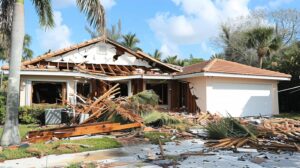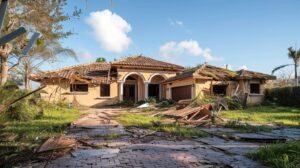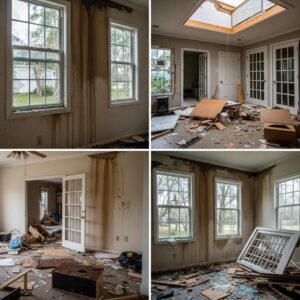
Why Storm Damage Demands Immediate Professional Assessment
When a storm hits Palm Beach County, the moment right after impact shapes everything that follows. Our experience responding to hundreds of emergencies has taught us that the difference between a property that recovers smoothly and one that spirals into years of problems often comes down to decisions made in those first critical hours.
This guide walks you through what we’ve learned about navigating storm damage, the real tradeoffs between quick fixes and proper restoration, and how to protect your investment while working within insurance constraints.
The first 24 to 48 hours after storm damage are critical. Water intrusion, roof breaches, and compromised structural integrity don’t wait for you to catch your breath. What looks like a contained problem on day one can become mold colonies, structural rot, and electrical hazards by week two.
We arrive at properties expecting homeowners and business owners to be understandably overwhelmed. Our first conversation isn’t about sales; it’s about preventing secondary damage. We assess what’s immediately dangerous, what’s causing active water intrusion, and what needs stabilization before anything else happens.
Here’s what an immediate professional assessment accomplishes:
- Identifies active water sources and entry points you might miss
- Documents visible structural damage for insurance purposes
- Flags electrical and safety hazards that require immediate attention
- Determines whether temporary measures are sufficient or full restoration is required from the start
- Protects against insurance claim denials that happen when properties are left unattended
Many property owners attempt their own initial assessment using photos and basic observation. This almost always underestimates damage. Hidden water saturation in insulation, drywall, and structural framing won’t show on a visual inspection. Mold spores begin colonizing wet materials within 24 to 48 hours, creating health risks and permanent structural weakness.
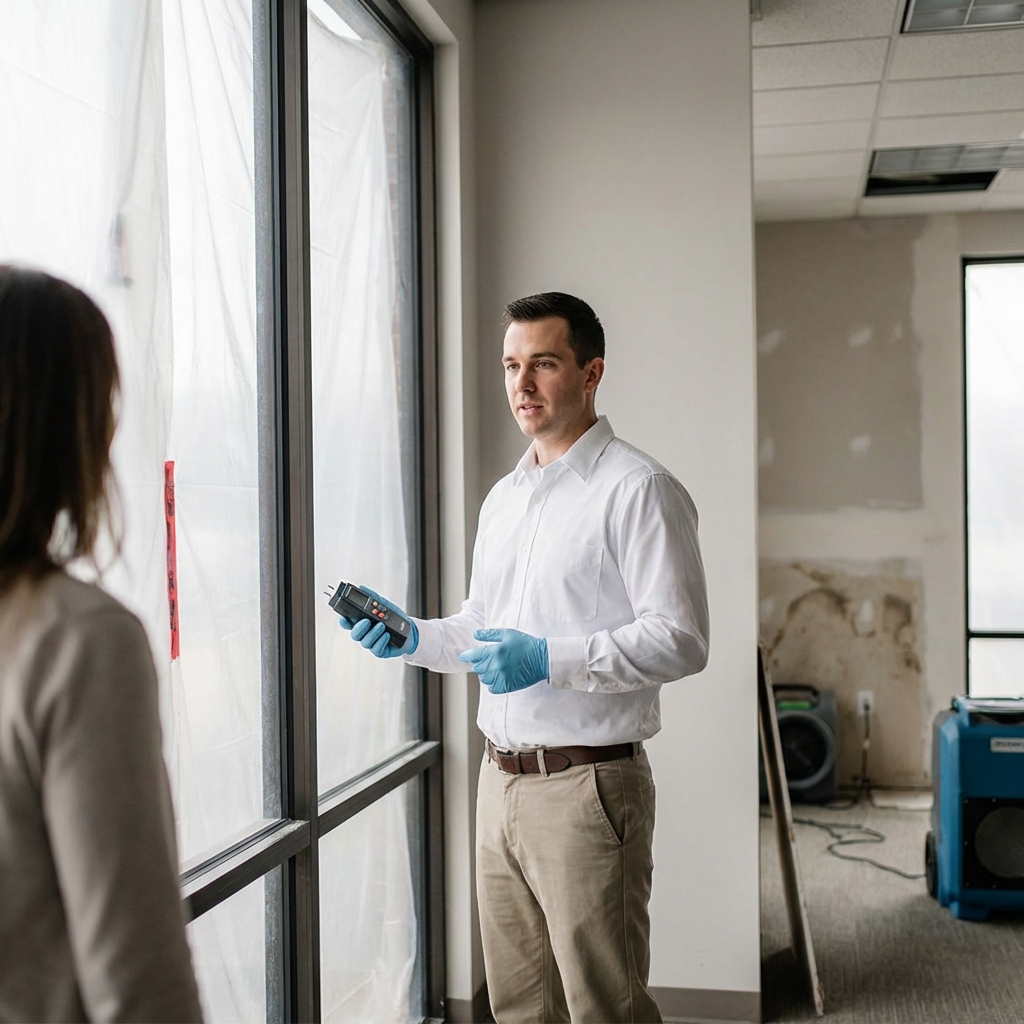
We use moisture detection equipment, thermal imaging, and structural knowledge to see what’s actually damaged. This upfront investment in assessment prevents costlier decisions later.
Your next step: Don’t wait for the storm to clear completely before calling. We operate 24/7 and typically arrive within hours of your call.
Temporary Repairs: When They Help and Their Limitations
Temporary repairs serve one purpose: stopping additional damage while you plan permanent restoration. They’re triage, not treatment.
A tarped roof, boarded windows, and extracted standing water buy you time. They prevent rain from continuing to pour into walls, keep looters out, and allow you to organize insurance documentation without water actively destroying more of your property. These measures matter, and we deploy them constantly.
But temporary repairs have hard limits. A tarp on your roof works until wind picks up, until it’s weighed down incorrectly, or until the fasteners corrode. Boards over windows don’t restore security systems, air conditioning function, or weatherproofing. Extracting standing water doesn’t dry the materials it’s been sitting in for hours or days.
We see the real cost of relying on temporary measures play out repeatedly:
- Tarps fail during second-wave storms, causing additional damage
- Boarded properties remain uninhabitable, forcing extended displacement and hotel costs
- Extracted water leaves behind damp framing and insulation that become mold nurseries
- Temporary measures delay insurance inspections, pushing claim decisions further out
- Property owners attempting their own temporary fixes sometimes cause more damage (improper fastening, punctured roofs, electrical hazards)
One scenario we encountered last season illustrates this clearly. A Wellington property owner tarped his roof after a hurricane, extracted standing water himself, and waited three weeks before calling us. By then, mold was visible in multiple areas, drywall had begun to fail, and the insurance company delayed their inspection until professional remediation was underway. What could have been completed in two weeks took six.
Temporary repairs make sense as immediate stabilization while you’re securing professional help and contacting your insurance company. They don’t make sense as permanent solutions or as delays in arranging comprehensive restoration.
What to do next: Use temporary measures to protect against immediate additional damage, but schedule professional assessment and restoration planning within 24 hours.
How Our Full Structural Restoration Protects Your Investment
Full storm damage restoration addresses not just what’s visible but what’s deteriorating behind walls, above ceilings, and inside structural cavities.
When we execute comprehensive restoration, we’re protecting the actual structure of your building, the safety of its occupants, and the resale value of your asset. This isn’t cosmetic repair. This is structural integrity.
Here’s what full structural restoration includes:
- Complete moisture mapping to identify all saturated materials, not just visible water
- Removal of compromised drywall, insulation, and framing that can’t be effectively dried
- Professional structural drying using industrial equipment positioned throughout the property
- Mold remediation and testing to verify the space is safe before reconstruction
- Electrical system inspection and repair for any water-damaged wiring or fixtures
- Rebuilding with materials and techniques that restore the original structure and value
- System restoration (HVAC, plumbing, electrical) tested and verified functional
The core difference: temporary repairs stabilize; full restoration actually fixes the problem.
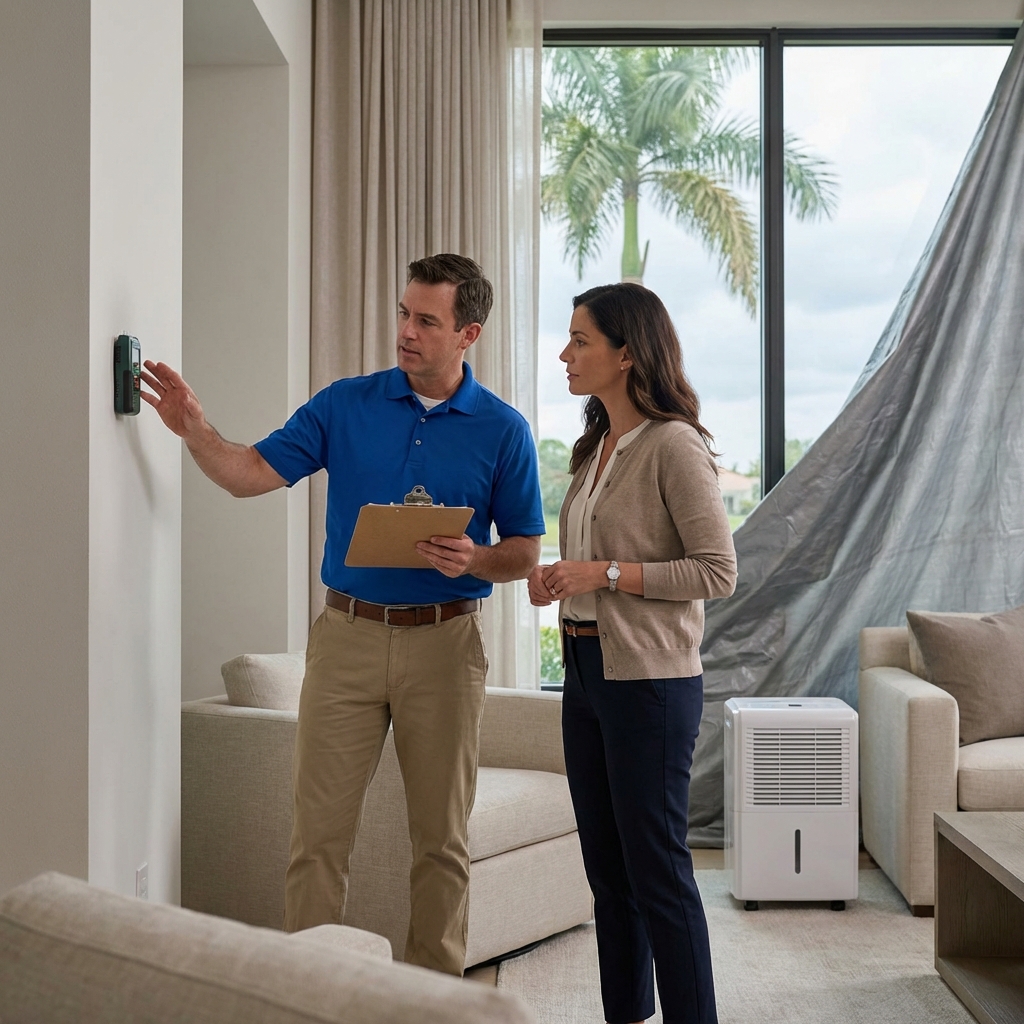
When we approach a water-damaged property, we’re not trying to dry everything and hope mold doesn’t appear. We’re removing the materials that can’t be adequately dried and replacing them with proper reconstruction. This is more expensive upfront than hoping to salvage everything, but it eliminates the mold risk that temporary drying often creates.
Consider what happens with just water extraction and tarping. Materials are wet but still in place. Humidity remains high inside the structure. A few weeks later, mold appears because conditions were perfect for it. Now you’re dealing with both water damage and mold remediation, paying twice.
Full structural restoration is actually the cost-effective path because it resolves the problem once and prevents the cascade of secondary issues that emerge later.
Actionable takeaway: Request a full assessment that includes moisture mapping and structural evaluation, not just visual inspection and extraction.
The Hidden Costs of Delaying Permanent Repairs
We’ve watched property owners attempt temporary repairs and “see how it goes” for months, thinking they’re saving money. This approach consistently creates expenses that dwarf what permanent restoration would have cost.
The hidden costs accumulate in layers:
Mold remediation escalation: Small mold colonies discoverable weeks after a storm require targeted remediation. Colonies that have spread for months require extensive remediation and possible structural removal. Costs can triple or quadruple.
Structural failure: Wood framing exposed to moisture for extended periods loses structural capacity. Joists become weak. Load-bearing walls settle. Foundation issues emerge. Once structural failure begins, repairs aren’t straightforward; they require engineering involvement and extensive reconstruction.
Insurance complications: Many policies have time limits on claim filing and recovery. Delays can result in partial denials or complete denial of secondary damage claims. We’ve seen cases where delayed repairs meant mold damage fell outside coverage.
Living costs: Displaced families spending weeks or months in hotels, temporary rentals, or with family add up quickly. Commercial properties losing revenue while waiting represent significant ongoing losses.
Deterioration acceleration: Each weather event (rain, humidity spikes, temperature fluctuations) worsens conditions in a partially repaired property. A problem that could be resolved in one restoration effort in month one becomes a multi-phase project by month four.
We worked with a business owner in Wellington who delayed structural restoration for four months after hurricane damage. The initial estimate for comprehensive restoration was roughly $85,000. By the time mold issues made the property unusable and structural repairs became necessary, the final cost exceeded $240,000. The difference wasn’t in the scope of damage; it was in what additional damage developed while waiting.
Insurance companies understand this dynamic. Many will pressure property owners to proceed with restoration quickly because they know costs escalate dramatically with delay.
Key insight: The financial case for proceeding with permanent restoration is usually stronger than the case for temporary measures and waiting.
Our Comprehensive Restoration Process for Storm-Damaged Properties
We’ve refined our approach over years of handling diverse storm damage situations. Our process is designed to be thorough while moving efficiently.
Phase one: Emergency assessment and stabilization (hours 0-24)
Our team arrives ready to stop active problems. We assess safety hazards, identify water entry points, and deploy immediate protection (tarping, boarding, water extraction). We also begin documentation for insurance purposes, photographing damage systematically.
Phase two: Detailed evaluation and planning (days 1-3)
Once the property is stabilized, we conduct thorough structural assessment using moisture detection equipment and visual inspection. We map affected areas, identify materials that must be removed versus those that can be salvaged, and outline the complete restoration scope. We also coordinate with your insurance company’s adjuster to ensure alignment on what will be covered.
Phase three: Selective demolition and removal (days 3-7)
This is where comprehensive restoration differs from temporary measures. We remove drywall, insulation, and other materials that can’t be adequately dried without risk of hidden mold. We preserve structural elements that can be salvaged. We also address any electrical or plumbing systems damaged by water, removing compromised components before they create hazards.
Phase four: Structural drying and preparation (days 7-14)
Industrial dehumidifiers and air movers are positioned throughout the property. We monitor moisture levels continuously, adjusting equipment as materials dry. We also begin any necessary repairs to structural elements (framing, joists, load-bearing walls) before reconstruction begins.
Phase five: Mold testing and remediation (concurrent with drying)
We conduct air quality testing to verify mold isn’t colonizing the dried areas. If any mold is detected, we implement targeted remediation. Only after testing confirms the space is safe do we proceed to reconstruction.
Phase six: Reconstruction and systems restoration (weeks 2-6, depending on scope)
We rebuild with new drywall, insulation, and finishes. We restore electrical and plumbing systems. We test HVAC operation and verify all systems function properly. We coordinate with you on material selections, finishes, and any upgrades you want to incorporate.
Phase seven: Final inspection and occupancy
We conduct a final walkthrough with you, verify all work meets code requirements, and ensure the property is ready for occupancy. We provide documentation of all work completed and testing performed.
Throughout this process, we maintain communication with your insurance company and help coordinate claim approvals. We also maintain detailed records and photos so you have complete documentation of what was done and why.
Insurance Navigation: How We Maximize Your Claims
Insurance navigation is where many property owners lose significant money. Without proper documentation and professional guidance, insurance companies have no obligation to cover secondary damage or comprehensive restoration.
We position ourselves as partners in the claims process, not replacements for your insurance company. Our role is to:
- Document damage systematically with photos and written descriptions that insurance companies understand
- Provide detailed estimates that itemize scope and justify costs
- Advocate for comprehensive restoration rather than accepting minimalist repair proposals
- Flag secondary damage (mold, structural compromise) that may not be immediately obvious but is covered under most policies
- Coordinate timelines so insurance inspectors can complete their assessment while we’re performing initial work
Here’s where this matters practically. Insurance policies typically cover water damage restoration but have specific language around mold remediation, temporary living expenses, and what qualifies as “reasonable and necessary” repair. If your initial claim estimate is too low, the insurance company may deny supplemental claims later for mold remediation or structural repairs that weren’t included in the original assessment.
We’ve seen claims denied because property owners accepted an insurer’s initial estimate without having a professional assessment first. Later, when mold appeared or structural issues emerged, those weren’t covered because they “should have been identified upfront.” Having a comprehensive professional assessment before filing your claim prevents this scenario.
We also help coordinate the claim timeline. Insurance companies want to inspect damage quickly; property owners want time to assess the scope. We can typically begin initial stabilization and assessment work immediately while the insurance inspector schedules their visit, so you’re not caught between conflicting needs.
Practical next step: Have us complete a professional assessment before you file your insurance claim. This gives you the documentation you need to file comprehensively rather than piecemeal.
Preventing Secondary Damage During the Restoration Phase
Secondary damage is the cascade of problems that emerge from incomplete initial response. Mold is the most obvious example, but structural damage, electrical hazards, and occupant health risks follow the same pattern: initial water intrusion, delayed or incomplete response, and compound problems weeks or months later.
We prevent secondary damage through several deliberate practices:
Immediate moisture control: Standing water is extracted within hours. High-humidity areas are isolated and dehumidified aggressively. We’re not trying to air-dry; we’re using industrial equipment to reduce moisture levels rapidly.
Selective material removal: Materials that can’t be completely dried (certain insulation types, some drywall when saturated deeply) are removed rather than left to dry with hidden moisture pockets. This eliminates the mold risk that comes with partial drying.
Continuous monitoring: We place moisture sensors in structural cavities and hidden spaces, monitoring drying progress daily. When a space isn’t drying on schedule, we adjust ventilation and dehumidification immediately rather than hoping it will eventually dry.
Mold prevention through testing: We conduct air quality testing after drying is complete but before reconstruction. If any mold is present, we remediate it before rebuilding. This prevents sealed mold colonies from thriving inside your restored property.
System safeguarding: We identify and isolate any electrical, plumbing, or HVAC systems damaged by water. These are either repaired or replaced before the property is used, preventing electrical fires, contaminated water lines, or HVAC failures that spread mold spores.
Vapor barrier installation: As we reconstruct, we install proper vapor barriers and ensure ventilation systems can manage humidity in the restored areas. This prevents future moisture intrusion from recreating the original problem.
The cost of preventing secondary damage is always lower than the cost of managing it after it develops. A removed section of mold-prone insulation during initial restoration costs far less than comprehensive mold remediation months later.

Why Palm Beach Property Owners Choose Our Complete Solution
Our approach to storm damage restoration is rooted in what we’ve learned from handling hundreds of emergency responses and full restorations throughout Palm Beach County. We’re not generic restoration contractors; we’re specialists in the specific challenges that water damage and storms create in this region.
Palm Beach properties present particular restoration challenges. Our building stock includes older structures with construction techniques that behave differently when exposed to water compared to newer construction. Salt air accelerates corrosion of electrical and metal components. Coastal humidity, even after initial drying, creates ongoing challenges that inland restoration companies don’t fully understand.
We also understand Palm Beach’s insurance landscape. Major carriers operating in the county have specific expectations for documentation and restoration standards. We work with these carriers regularly and know how to structure our work and documentation to maximize claim approvals.
Beyond technical expertise, property owners choose us because we maintain 24/7 availability and we communicate clearly. When your property is damaged, you need immediate response and straightforward explanations of what’s happening and why. You shouldn’t feel like you’re navigating an industry where everyone is using terminology to obscure rather than clarify.
We also structure our work to minimize disruption to your life or business operations. We understand that displaced families and closed businesses create cascading problems beyond just restoration costs. We schedule work efficiently, coordinate with insurance companies to avoid redundant inspections, and keep you informed of progress daily.
Timeline Expectations for Emergency to Full Recovery
The timeline from initial damage to complete recovery varies based on damage scope, but we can outline realistic expectations.
Hours 0-24 (Emergency response): We’re on-site, assessing damage, stopping active water intrusion, and beginning extraction. For most properties, we’ve deployed initial stabilization and equipment by end of day one.
Days 1-3 (Detailed assessment): We complete thorough evaluation, coordinate with insurance, and outline the full restoration scope. By day three, you understand exactly what will happen next and approximately how long full restoration will take.
Days 3-10 (Selective demolition and drying): We remove damaged materials, deploy industrial drying equipment, and begin structural repairs if needed. Humidity begins dropping significantly by day five or six.
Days 10-21 (Continued drying and mold testing): Materials continue drying. We conduct air quality testing to verify mold isn’t present. By day 14 to 21, most properties are ready for reconstruction to begin.
Weeks 3-6 (Reconstruction): We rebuild drywall, restore systems, apply finishes, and test all components. Timeline depends on scope, but most residential properties are substantially complete by week five or six.
Weeks 6-8 (Final details and occupancy): Final touches, punch-list items, and final inspections. Most properties are ready for full occupancy by week six to eight after the initial damage.
For larger commercial properties or those with significant structural damage, extend these timelines. A small residential water damage might be complete in four weeks; a hurricane-damaged commercial building might take three to four months.
The key variable is how quickly the property dries and how much material removal is required. Selective demolition takes time upfront but accelerates the overall timeline because you’re not waiting for deeply saturated materials to dry. Trying to salvage everything often extends the timeline because materials dry more slowly and mold testing must be repeated if drying stalls.
We’ll provide a specific timeline after our detailed assessment, and we’ll update it as conditions change.
Getting Started with SuperClean Restoration Today
When storm damage affects your Palm Beach County property, the hours immediately following that event determine much of your recovery trajectory. Waiting days or weeks to engage professional help almost always increases final costs, extends displacement, and complicates insurance claims.
Here’s how to begin:
Call immediately: We operate 24/7. When you call, you reach a person who can dispatch a team to your property within hours. Initial assessment and emergency stabilization begin while you’re still making other decisions.
Document everything: Take photos and video of visible damage before we arrive. This helps with insurance claims and gives us baseline comparison as restoration progresses. Don’t try to move damaged items around or extract water yourself; this can cause additional damage and complicate restoration.
Prepare your insurance information: Have your policy details available when we arrive. We’ll work directly with your insurance company’s adjuster, but having your policy number and coverage details speeds up initial conversations.
Ask questions during assessment: When we complete our detailed evaluation, we’ll explain exactly what we’re doing, why we’re doing it, and what you can expect next. If anything is unclear, ask. You should understand the full restoration plan before we begin.
We treat every property like it’s ours. Your recovery is our priority, and we structure our work to restore both the physical property and your confidence that the problem is genuinely resolved.
Contact us today to schedule your professional assessment and begin the restoration process.