The Hidden Risk of Inadequate Mold Documentation
When water damage strikes your Palm Beach home or business, mold growth often follows within 24 to 48 hours. What many property owners don’t realize is that discovering mold and documenting it properly are two completely different things. We’ve worked with hundreds of Palm Beach County residents who discovered mold only to find their insurance claims rejected or significantly reduced because the documentation didn’t meet professional standards.
The difference between a snapshot photo and proper mold testing documentation can mean thousands of dollars in coverage approval or denial. We understand this frustration because we see it regularly. That’s why we’ve built our entire mold assessment and documentation process around protecting your financial interests and your property’s integrity.
Most property owners think mold is straightforward: you see it, you clean it, you move on. In reality, mold presence and extent require professional verification to be credible to insurance companies, buyers, and remediation contractors. Without solid documentation, you’re essentially asking people to take your word for it.
We’ve encountered situations where homeowners attempted their own mold testing using DIY kits or relied on unlicensed “inspectors” who provided reports lacking the credentials that insurers actually trust. When a claim arrived on the insurer’s desk, it was rejected immediately. The property owner then faced two problems: the original mold issue was never properly addressed, and they had wasted time and money on inadequate documentation.
Documentation gaps create several downstream problems. Insurance adjusters need specific, measurable data to justify claim payouts. Lenders and future buyers conduct their own inspections and will flag incomplete or vague prior reports as red flags. Remediation contractors need baseline data to know exactly what they’re treating and to verify their work later. Without professional documentation, you’re starting from zero each time someone needs proof.
Action step: If you’ve already had mold assessed informally, gather whatever documentation exists and bring it to a certified professional for review. We can tell you immediately what’s missing and what additional testing would strengthen your position.
Why Proper Mold Testing Documentation Matters for Insurance Claims
Insurance adjusters operate on evidence, not assumptions. When you file a water damage claim that likely resulted in mold growth, the insurer will require proof of the mold’s presence, location, and extent before approving remediation costs. Vague reports or amateur inspections simply don’t meet their standard.
We prepare documentation specifically formatted for insurance review. This means our reports include:
- Exact locations of mold growth with photographic evidence and measurements
- Spore count data from laboratory analysis (not just visual observations)
- Comparison between affected areas and non-affected baseline samples
- Professional recommendations that align with industry remediation standards
- Our Florida license and certifications prominently displayed to establish our authority
Here’s a real scenario we handled recently: A Wellington homeowner noticed discoloration in a basement after a pipe burst. They took photos and contacted their insurance company, describing “possible mold.” The adjuster couldn’t approve the claim without professional confirmation. We arrived within hours, completed full mold testing including air samples and surface swabs, and delivered certified documentation within 48 hours. The insurer approved the full remediation claim within a week of receiving our report.
Without our professional assessment, that homeowner would have been stuck paying out of pocket while their insurer requested additional information endlessly. Our documentation closed the conversation and opened the claim.
Action step: Before filing a claim for any water damage, contact us for a mold assessment. Having professional documentation ready when you file significantly accelerates approval.
Our Comprehensive Mold Testing and Documentation Process
Our process begins the moment you call. We schedule a 24/7 emergency assessment because mold progresses rapidly, and every hour matters when your property is at risk.
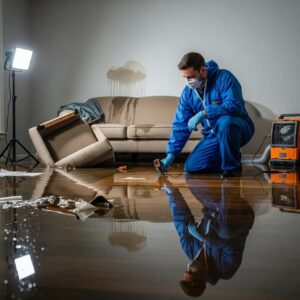
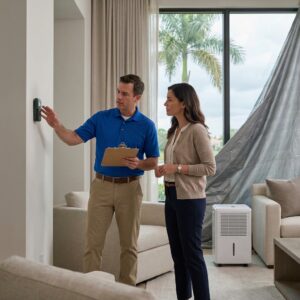
Upon arrival, our certified mold inspector conducts a thorough visual inspection of the affected area and surrounding spaces. We’re looking for discoloration, water stains, odors, and visible growth patterns. This isn’t a casual walkthrough; we document everything with high-resolution photography, measurements, and detailed notes.
Next, we collect samples for laboratory analysis. This is where many amateur inspections fail. We take both surface samples (swabs from visible or suspected mold) and air samples (capturing mold spores in the air itself). Air sampling is crucial because it reveals whether mold spores are actively dispersing throughout your property, a sign of an active infestation requiring immediate remediation.
We also collect baseline samples from unaffected areas of your property. This comparison data is essential for documentation because it shows the difference between normal indoor mold levels and elevated levels in the problem area.
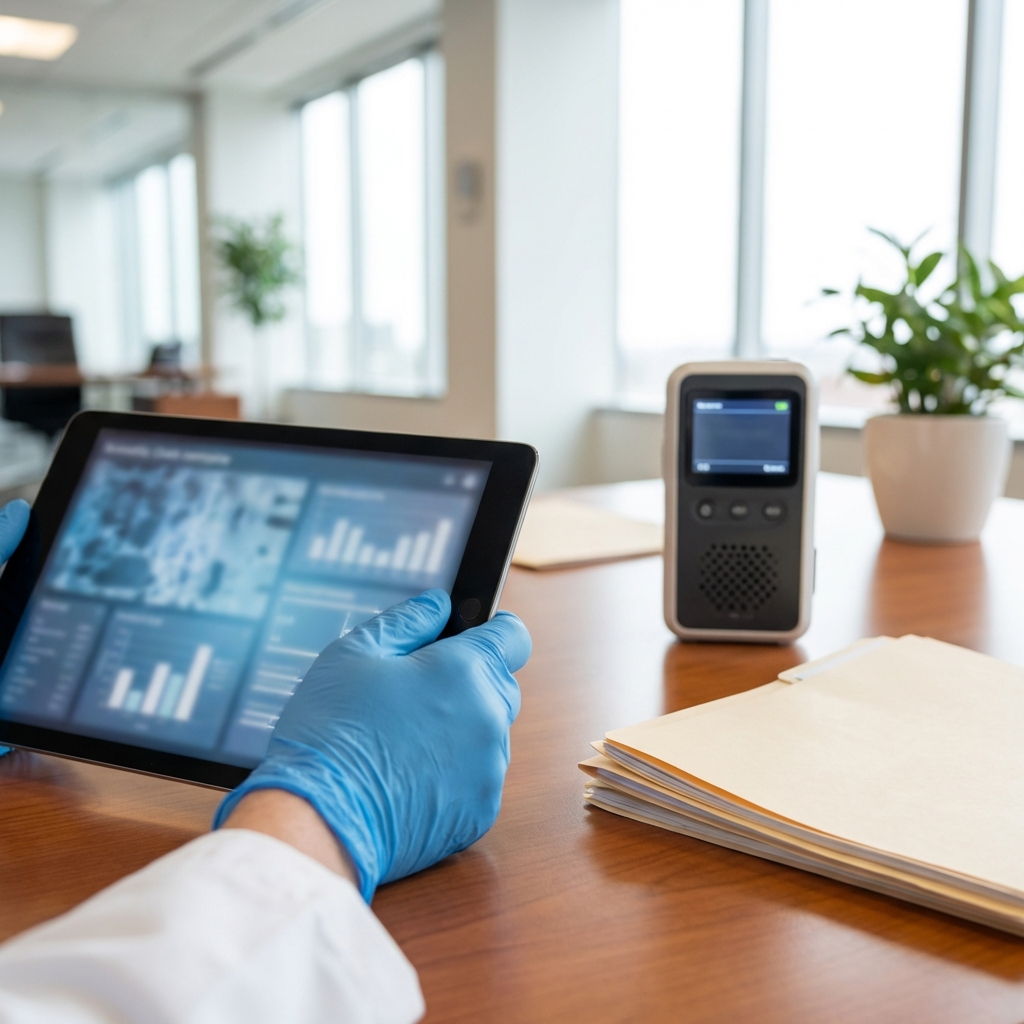
All samples are sent to an accredited third-party laboratory for analysis. We don’t perform the testing ourselves, which ensures absolute objectivity and credibility with insurers and other parties reviewing the results.
Once lab results return (typically 3 to 5 business days), we compile a comprehensive mold testing report that includes:
- Visual assessment findings with annotated photographs
- Laboratory test results identifying mold species and spore counts
- Assessment of affected square footage and depth of penetration
- Professional recommendations for remediation
- Documentation of areas tested and areas that remain clear
This complete package becomes your official record and your protection.
Action step: Request that we include thermal imaging in your assessment if water intrusion source is unclear. This adds another layer of documentation identifying where moisture is actually hiding.
How Our Certified Testing Protects Your Property Value
Property value depends on safety and structural integrity. When mold exists but isn’t documented, it becomes a hidden liability that will surface during any future inspection or appraisal. Buyers, lenders, and insurance companies all conduct their own mold assessments before committing to a property.
Our professional documentation serves as your evidence of good faith disclosure and proper remediation. When we test your property, our report becomes part of your property history. If remediation follows our recommendations and our follow-up testing confirms successful treatment, you have a clean chain of documentation showing the problem was addressed properly.
This matters when you eventually sell or refinance. A buyer’s inspector finds no active mold, and you can show that a previous issue was professionally tested, documented, and remediated. That transparency protects your sale price and closes negotiations faster than properties with unclear mold histories.
We’ve documented properties across Wellington, West Palm Beach, and throughout Palm Beach County where proper testing and remediation actually increased buyer confidence. Instead of being a liability, the documented history of professional treatment became proof that the property was responsibly maintained.
Consider the alternative: A property where mold was “probably cleaned” but never tested and documented. A future buyer’s inspector finds elevated spore counts, requests additional testing, and suddenly there’s negotiation friction and uncertainty about the property’s actual condition.
Action step: Even if you’re not selling soon, maintain a file containing all of our mold testing documentation alongside any remediation completion reports. This creates a verifiable timeline that protects your equity.
Documentation Standards We Follow to Ensure Results Hold Up
We adhere to industry standards that insurance companies, real estate transactions, and legal proceedings recognize as legitimate and thorough. Our documentation meets protocols established by the Institute of Inspection, Cleaning and Restoration Certification (IICRC) and follows the standards outlined in the New York City Guidelines for Assessment and Remediation of Fungi in Indoor Environments.
These aren’t arbitrary requirements; they exist because they work and because professionals throughout the restoration industry reference them constantly.
Our certified inspectors complete regular continuing education to stay current with evolving mold detection and assessment techniques. We use calibrated equipment for moisture detection and air quality sampling. Every report we issue is tied to our Florida license and our professional liability insurance, which means our documentation is backed by our professional standing.
We photograph not just the problem areas but also the testing process itself. This creates a transparent record showing how we identified the mold, where we sampled, and what conditions we documented. Transparently documenting our methodology strengthens the credibility of our findings.
Perhaps most importantly, we ensure our reports are legible, organized, and written in language that inspectors, adjusters, and property owners can understand. Technical jargon appears but is explained. Findings are clearly prioritized by severity. Recommendations are specific and actionable.
We’ve seen poorly formatted reports from unlicensed individuals that, while potentially containing accurate data, were rejected simply because they looked unprofessional or were difficult to parse. Our documentation is designed to be accepted and understood on first reading.

Action step: Ask any mold testing company for a sample report before hiring them. Can you understand the findings? Does the company name and license appear prominently? If either answer is no, keep looking.
Real Outcomes: How Our Reports Help Palm Beach Property Owners
Let’s look at actual results from properties we’ve served. A commercial property owner in West Palm Beach experienced a roof leak during the 2025 hurricane season. Water entered the ceiling cavity above a conference room. The owner contacted us for emergency assessment before informing the insurance company.
Our documentation identified mold growth within the ceiling cavity (not yet visible to the naked eye but detectable through moisture readings and air sampling). We provided the insurer with specific recommendations for cavity remediation rather than just surface treatment. Because our report was thorough and came from a certified professional, the insurer approved cavity treatment that might otherwise have been denied as excessive. The resulting remediation prevented what could have become a major problem months later.
A residential client in a Wellington neighborhood discovered what she suspected was mold behind a bathroom wall following a slow plumbing leak. She was understandably worried about her three children and didn’t want to overreact, but she also couldn’t afford to underestimate a potential health hazard. Our testing documented that yes, mold was present, but it was localized to the wall cavity and had not spread to the HVAC system or other areas. This specific documentation allowed the property owner to make an informed decision about remediation scope and budget.
In another case, a commercial landlord was being pressured by a tenant who claimed mold was causing health issues. The tenant wanted extensive remediation. Our objective documentation identified some minor mold in one location but showed that indoor air quality was within normal ranges throughout the property. This evidence prevented unnecessary remediation expense and also created documented proof protecting the landlord from unfounded liability claims.
These outcomes happen because documentation forces objectivity. Emotion, worry, and worst-case-scenario thinking get replaced with actual measurement and analysis.
Action step: If you’re unsure whether a mold concern justifies the cost of remediation, let us test first. Our assessment often provides clarity that saves money by focusing remediation efforts precisely where they’re actually needed.
What Sets Our Mold Testing Apart From Generic Inspections
Not all mold assessments are equal. The difference comes down to expertise, equipment, methodology, and commitment to documentation standards.
Some companies offer “mold inspections” that are really just visual surveys. An inspector walks through, looks around, and gives you an opinion. This is guesswork dressed up as professional assessment. An actual professional mold test includes laboratory analysis, air quality measurements, and moisture detection.
We invest in calibrated equipment that matters: moisture meters that measure precise water content in building materials, air sampling pumps that capture representative spore samples, thermal imaging cameras that identify temperature differences revealing hidden moisture, and laboratory partnerships with accredited facilities that analyze our samples using recognized scientific methods.
Our inspectors hold Florida certification in mold assessment and remediation. We renew certifications regularly and attend industry conferences to stay ahead of emerging mold issues and detection techniques. This isn’t a sideline service we offer occasionally; it’s a core capability built into our company.
We also maintain professional liability insurance specifically covering mold assessment and documentation. If our report proves inaccurate or our sampling methodology is questioned, our insurance backs our work. This financial commitment means we take accuracy seriously.
Perhaps most importantly, we’re transparent about what we can and cannot conclude. If testing doesn’t support the presence of significant mold, we say so clearly. If air quality is normal, we document that. We don’t exaggerate findings to justify larger remediation projects. Our credibility depends on accuracy, not on upselling.
Action step: When requesting a mold assessment, ask the company directly about their certifications, their laboratory partners, and their professional liability coverage. Legitimate professionals answer these questions readily.
The Cost of Skipping Professional Mold Testing Documentation
Choosing not to get professional mold testing documentation seems like a way to save money in the short term. In practice, it almost always costs more.
Without documentation, insurance claims get denied or reduced. Property owners end up paying out of pocket for remediation that might have been covered. We’ve talked with homeowners who spent $15,000 on mold remediation that was never approved by insurance because they lacked proper documentation of the initial problem.
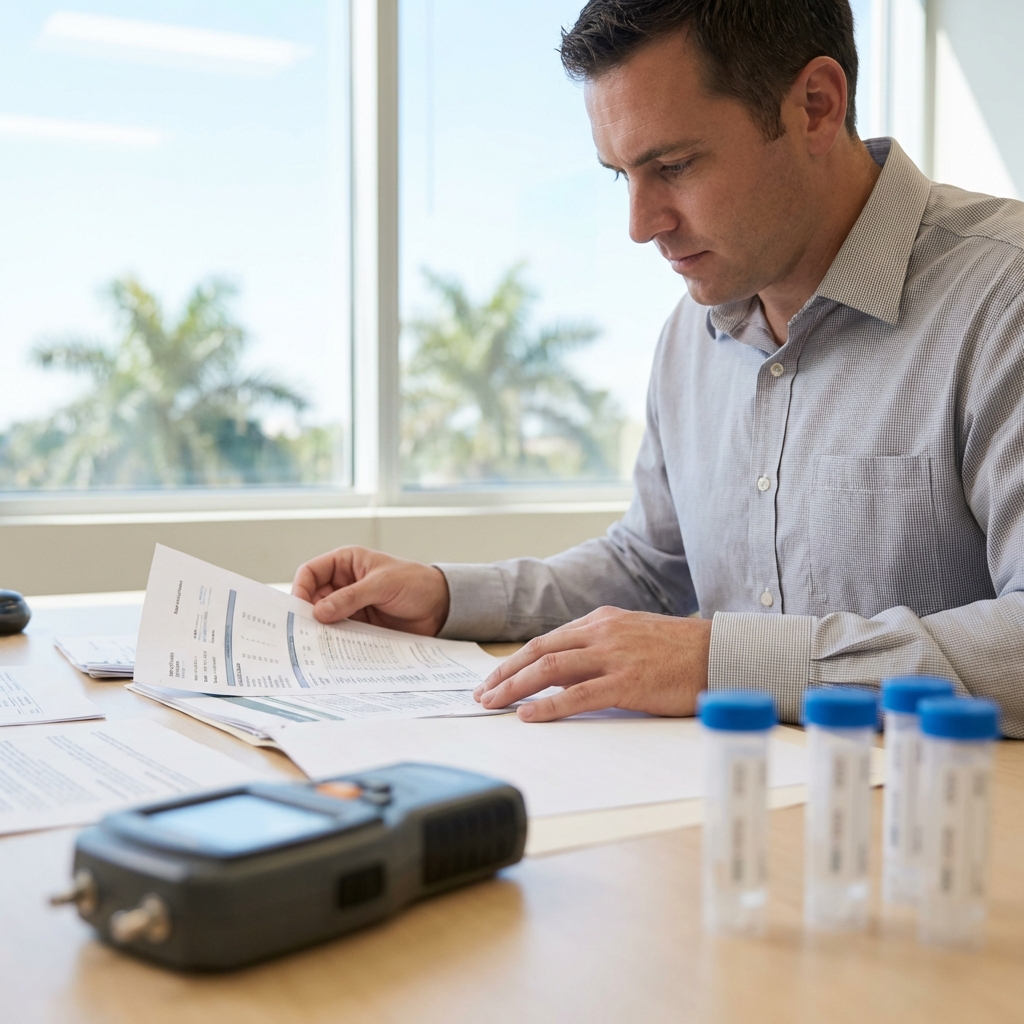
Selling a property becomes complicated and slow. A buyer’s inspector identifies possible mold, which triggers negotiations about who pays for testing and remediation. The sale price often drops because uncertainty about mold is treated as a significant risk. Professional documentation you had from the start could have prevented this negotiation entirely.
Health concerns linger because you’re never certain the problem is actually solved. Without baseline testing and follow-up testing after remediation, you don’t know whether the mold situation is truly resolved or whether you’re just not seeing it anymore.
Property value erosion happens gradually. Future appraisals note the mold history. Insurance premiums may increase if mold is discovered later. Structural damage occurs if mold growth isn’t properly assessed and addressed, leading to wood rot and material degradation that becomes exponentially more expensive to repair.
The math is straightforward: Professional mold testing documentation costs between $800 and $2,500 depending on property size and complexity. Skipping it to save that amount often leads to claim denials, remediation disputes, and property value loss totaling tens of thousands of dollars.
Action step: Budget for professional testing as an investment that protects a far larger asset (your property). The return comes through avoided claim denials, faster insurance processing, and protection of property value.
Our 24/7 Emergency Mold Assessment and Fast-Track Documentation
Water damage doesn’t wait for business hours, and mold growth doesn’t pause for your schedule. We operate 24/7 specifically because mold is a time-sensitive issue.
When you call us after hours with a water damage emergency, our duty manager dispatches a certified inspector to your property within two hours in most cases. We begin the assessment immediately because the sooner we document the situation, the sooner your insurance claim process begins.
For properties requiring accelerated documentation (perhaps you have a closing date approaching or an urgent insurance deadline), we offer fast-track lab analysis options. Some samples can be analyzed and reported within 48 hours rather than the standard 3 to 5 days.
Our emergency protocols ensure that your documentation starts the moment water damage occurs, not weeks later when you finally get around to calling someone. This creates the clearest possible record of what actually happened and what mold resulted from the specific incident.
We’ve handled countless situations where property owners call us within hours of discovering water damage. Our rapid response means we document conditions while they’re still acute, before secondary drying and cleanup efforts obscure evidence. This freshness of documentation is exactly what insurance companies want to see.
Action step: Save our number now before you need it. When water damage happens, your first call after ensuring safety should be to us. Don’t wait to see if mold develops; document the situation immediately while it’s fresh.
Getting Started With SuperClean Restoration Today
Reaching out to us is straightforward. You can call 24/7 for emergency response or to schedule a standard assessment. We’ll ask you about the water damage event, the timeframe, and any visible mold or moisture concerns you’ve noticed.
Our dispatcher will schedule your assessment at your earliest convenience or, if it’s an emergency, will dispatch someone immediately. When our inspector arrives, we’ll conduct the full visual assessment, explain what we’re finding as we work, and collect all necessary samples.
You’ll receive your completed documentation within 5 business days in standard cases or 48 hours in expedited cases. The report arrives in your email in a format you can easily share with your insurance company, your remediation contractor, or any other party who needs to verify the mold situation.
Many property owners find that the clarity provided by professional documentation actually reduces stress. Instead of worrying about whether mold is a serious problem, you have specific information telling you exactly what exists and what should be done about it.
Protecting your Palm Beach property starts with understanding what you’re dealing with. We’re here to provide that clarity through professional mold testing and thorough documentation.
Contact us today to schedule your mold assessment. When water damage threatens your property, professional documentation protects everything that matters.
For further reading: Water and Mold Experts.