Why Wellington Condos Face Critical Mold Challenges
Wellington’s coastal climate creates a perfect storm for mold growth. High humidity, salt air, and seasonal rainfall mean moisture is constantly working its way into building structures. Condos face unique vulnerabilities because shared walls, common plumbing systems, and HVAC networks can spread moisture and mold spores from one unit to neighboring units before anyone realizes there’s a problem.
We’ve seen this pattern repeatedly across Wellington properties. A small leak in a neighbor’s unit or a poorly maintained roofline sends water into wall cavities where it sits undetected for weeks. By the time a resident notices discoloration or odor, mold colonies have already established themselves deep within structural materials. The building materials used in many Wellington condos from the 1980s and 1990s also tend to be more porous, absorbing moisture more readily than modern construction.
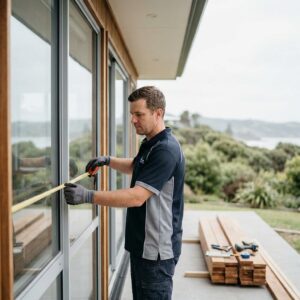
Condo-specific challenges compound the issue. Many units lack proper exterior maintenance schedules. Window seals deteriorate. Balcony drainage systems fail. When multiple owners occupy the same structure, responsibility becomes murky, and problems escalate. We’ve encountered situations where mold spread through three units because no one wanted to take ownership of the source.
The key takeaway: act fast. If you notice musty odors, water stains, or visible growth in your Wellington condo, contact us immediately. Early intervention prevents exponential damage and protects neighboring units.
How Mold Damage Threatens Your Property Value and Health
Mold isn’t just an aesthetic problem. It actively destroys property value and poses genuine health risks to occupants. A single mold disclosure can reduce a condo’s market value by 5 to 10 percent, and that’s before structural repairs factor in. Buyers conduct inspections specifically for mold, and finding it often kills deals entirely.
Health impacts vary by individual sensitivity, but mold exposure can trigger respiratory issues, allergic reactions, and asthma aggravation. People with compromised immune systems face even greater risks. We’ve worked with residents who developed persistent coughs, sinus problems, and fatigue directly linked to hidden mold in their units. Once they moved out for remediation, their symptoms improved significantly.
The financial exposure extends beyond property value. Insurance claims for mold damage can be complicated and may be denied if the mold is deemed a result of poor maintenance rather than sudden water damage. Medical bills, temporary housing during remediation, and lost rental income (if you lease your unit) add up quickly. Some residents face HOA pressure to resolve mold issues, which means you’re often on the hook for costs whether insurance covers it or not.
Wellington condos often sit on investment portfolios too. A rental condo becomes uninhabitable during mold remediation, creating a gap in your income stream. Tenants won’t rent a unit with active mold problems, and you can’t legally lease it until remediation is complete and certified mold-free.
The practical action: document everything. Take photos of visible mold, water damage, or suspicious stains. Get a professional mold inspection now if you’ve experienced any water issues. This evidence strengthens insurance claims and protects your legal position.
Our Comprehensive Mold Assessment and Testing Process
We start every remediation project with a detailed assessment, not guesswork. Our process includes visual inspection, moisture mapping, and laboratory testing to identify exactly what we’re dealing with.
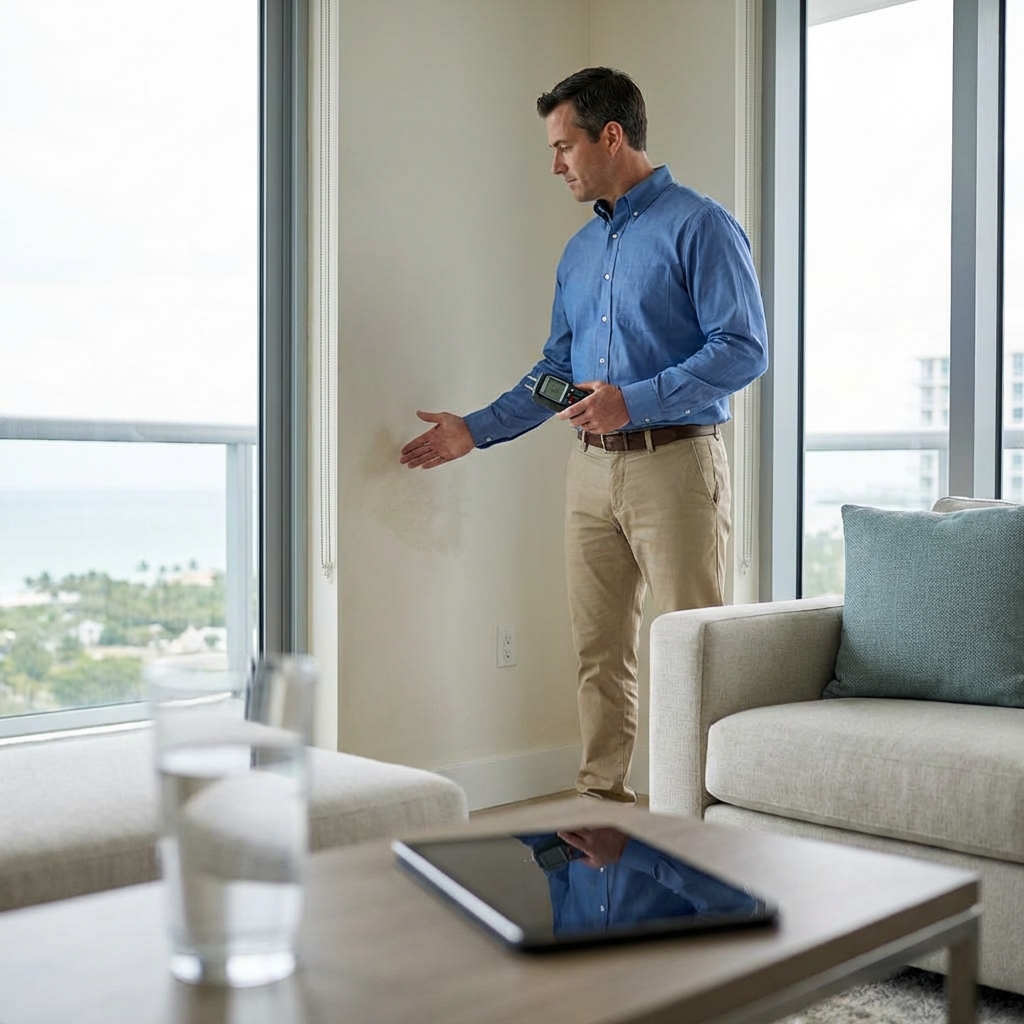
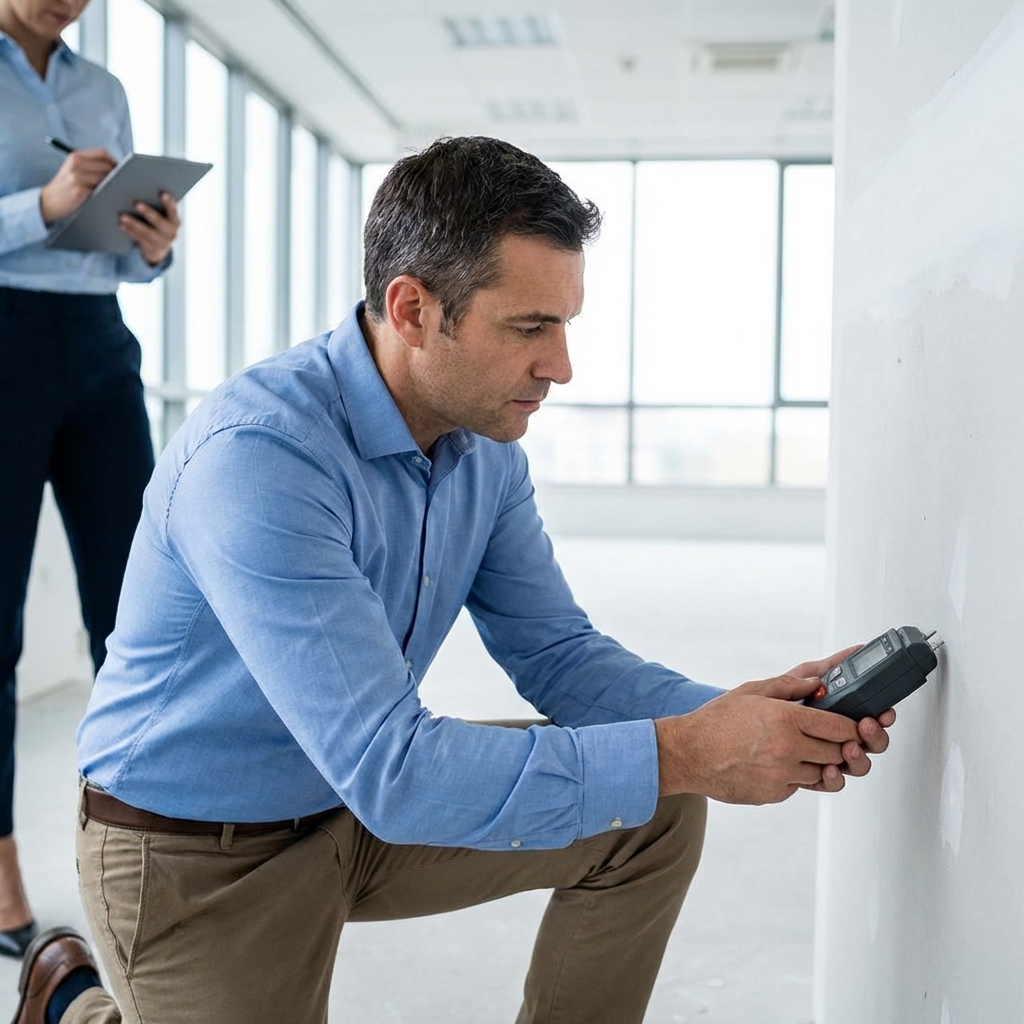
Our team conducts a physical walkthrough of your entire condo, checking common problem areas: bathrooms, kitchens, under sinks, around HVAC units, basement areas, crawlspaces, and attic zones. We look for visible mold colonies, water stains, and areas of elevated moisture. We use moisture meters to detect dampness hidden behind walls and under flooring where mold often grows unseen.
We also collect air samples and surface samples for laboratory analysis. These tests identify the specific mold species present and measure spore concentrations. This data is critical for two reasons. First, it tells us the severity and which remediation techniques will be most effective. Second, it provides documentation for your insurance company and creates a baseline for post-remediation testing to verify we’ve eliminated the problem.
We investigate the moisture source itself. Mold is always a symptom of a water problem. We trace leaks, identify drainage failures, and pinpoint humidity sources. Until we address the root cause, mold will return. This investigative work prevents costly repeat problems down the road.
Our report includes detailed findings, photographs, testing results, and a remediation plan tailored to your specific situation. You’ll understand exactly what we found, why it’s a problem, and how we’ll fix it. We also provide recommendations for preventing future mold growth.
What to do next: schedule a professional assessment if you suspect mold. Don’t rely on DIY testing kits, which lack accuracy and don’t guide remediation decisions effectively.
Advanced Remediation Techniques We Use to Eliminate Mold
Once we’ve completed our assessment, we deploy remediation techniques matched to the scope and severity of the infestation. We never use a one-size-fits-all approach.
For surface mold on drywall, tile, or wood, we apply professional-grade antimicrobial treatments that eliminate mold at the cellular level. If mold has penetrated deeply or affected structural integrity, we remove and replace affected materials. Porous materials like insulation, carpet, and drywall often need complete removal because mold roots are impossible to fully extract from these materials. We handle this carefully to prevent spore dispersal during removal.
We establish containment barriers in your unit to prevent spores from spreading to unaffected areas. Our team uses HEPA-filtered negative air units that capture airborne spores and vent them safely outside. We seal off work areas with plastic sheeting and maintain pressure differentials so contaminated air stays contained.
For large-scale infestations, we employ industrial-grade encapsulation techniques where we seal mold in affected materials before removal, preventing spore release. This is particularly important in multi-unit Wellington condos where neighbors are nearby and can’t be exposed to the remediation process.
After removal, we disinfect all surfaces with EPA-approved antimicrobial solutions. We address not just visible mold but potential spore settlement on unaffected surfaces throughout the unit. This comprehensive disinfection is why professional remediation outperforms DIY bleach solutions every time.
The action item: don’t attempt mold removal yourself if the affected area is larger than 10 square feet. Professional containment and removal protect your health and prevent the problem from spreading.
Our 24/7 Emergency Response Advantage
Water damage that leads to mold often happens at inconvenient times: heavy rains at midnight, pipe bursts on weekends, or storm damage after hours. We operate around the clock because waiting for business hours can mean the difference between contained damage and widespread mold.
Our 24/7 emergency line connects you directly with our team. We respond to Wellington condos within two hours of your call. Our rapid arrival means we can begin water extraction and moisture management immediately, dramatically reducing the timeline for mold development. It typically takes mold spores 24 to 48 hours to begin germinating in moist environments. Our quick response compresses this window.
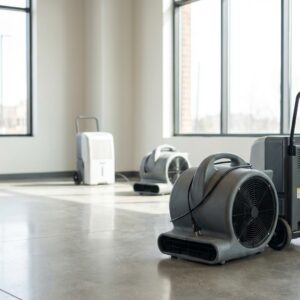
During emergencies, we prioritize stabilizing your unit. We extract standing water, deploy commercial dehumidifiers and air movers, and begin the drying process before mold has a chance to establish. We document all damage for your insurance claim and coordinate directly with your insurer’s adjusters.
Even after-hours service doesn’t mean cut corners. We dispatch fully equipped crews trained in our exact protocols. You receive the same comprehensive assessment and professional remediation whether we arrive at 2 a.m. or 2 p.m.
For Wellington condo residents, this 24/7 availability is crucial. Your building may have limited access hours, shared spaces that require coordination, or neighboring units we need to monitor. Our team coordinates with your HOA, manages neighbor notifications, and works within your building’s rules without delays.
Here’s what matters: having a trusted number to call when panic sets in. Save our emergency contact. If water damage occurs in your Wellington condo, don’t wait. Call us immediately, even if you’re unsure whether you need professional help.
Navigating Insurance Claims with Our Expert Support
Insurance claims for mold remediation can be frustrating and confusing. Coverage often hinges on whether the mold resulted from “sudden and accidental” water damage (typically covered) versus gradual moisture and poor maintenance (typically denied). We help you navigate this distinction.
We document everything our team observes: the water source, damage timeline, and affected materials. Our assessment reports are written specifically to support insurance claims. We photograph before, during, and after remediation. We provide air quality test results and moisture readings that demonstrate both the severity of the problem and the effectiveness of our solution.
We coordinate directly with your insurance adjuster. Our team explains our findings in terms insurance companies understand and expect. We’ve worked with dozens of insurers across Palm Beach County and know the documentation standards each one requires. This coordination prevents claim denials due to incomplete or unclear reporting.
When disputes arise, our expert testimony often resolves them. We can explain to your insurer why a particular remediation approach was necessary and cost-effective. We provide comparison quotes showing our pricing is competitive and fair. Our documentation gives your insurer confidence that you’re not inflating costs.
For condos, insurance coordination becomes more complex because the building’s master policy and your individual unit policy may both be involved. We help untangle these coverage questions and identify which party bears responsibility.
One practical step: request our pre-loss mitigation assessment if you’re concerned about potential mold risk in your unit. This proactive inspection creates documentation of current conditions, which strengthens any future insurance claim. It’s inexpensive and gives you peace of mind.
Structural Drying and Disinfection After Mold Removal
Removing visible mold isn’t enough. Structural materials hidden behind walls and under flooring must be dried completely, or mold will return. We employ industrial drying equipment and monitoring to ensure your condo is truly mold-free.
After contaminated materials are removed, we focus on drying remaining structural elements. We place commercial-grade dehumidifiers throughout your unit, pulling moisture from wall cavities, structural wood, and concrete. We use air movers to increase air circulation and accelerate evaporation. We monitor moisture levels continuously using moisture meters, tracking progress toward safe levels (typically below 16-18% wood moisture content).
This drying phase typically takes 5 to 14 days depending on humidity levels, the extent of water damage, and seasonal conditions. Wellington’s climate can slow drying times because outdoor humidity is already high, but we compensate with more equipment and longer operational periods.
Once structural materials are dry, we apply antimicrobial treatments to prevent future mold colonization. These treatments penetrate porous materials and create an environment where mold spores can’t germinate. They’re non-toxic to occupants but highly effective against mold growth.
We finish with a complete disinfection of all surfaces in your unit. We use EPA-approved disinfectants applied through fogging and wiping to reach every surface, including HVAC ducts and hidden areas. This eliminates mold spores that may have settled during the remediation process.
Final step: we conduct post-remediation testing to verify that mold levels have returned to normal baseline levels. We provide you with a certification of completion that documents your unit is remediated and safe for occupancy. This certification is essential for your records and for any future sale or lease of the property.
Why Our Warranty and Guarantee Protects Your Investment
We stand behind our work with a comprehensive warranty that protects you against recurrence of mold in remediated areas. This guarantee reflects our confidence in our process and our commitment to your long-term satisfaction.
Our standard warranty covers 2 years of remediated areas against mold recurrence, provided you maintain normal humidity levels and address any new water intrusion promptly. If mold returns in areas we treated during this period, we return at no charge to re-remediate the space.
The warranty excludes new damage from unrelated water events, which is fair because those situations fall outside our remediation scope. It also excludes damage resulting from improper maintenance by the property owner, such as turning off HVAC systems or ignoring active leaks.
For Wellington condo owners, this warranty matters because it demonstrates accountability. We’re not taking your money and walking away. We’re committing to results. If something goes wrong with our work, we fix it without arguments or additional charges.
We also provide ongoing guidance on preventing future mold growth. We explain humidity management, ventilation practices, and maintenance steps specific to your condo. This education reduces your risk significantly because many mold problems result from behaviors that are easily correctable.
Documentation of our warranty is included in your final remediation report. We recommend retaining this documentation for the life of your ownership. If you ever sell your condo, the warranty transfers with you and adds value to the property, demonstrating that mold was professionally addressed.
The practical takeaway: always ask remediation companies about their warranty. If they won’t guarantee their work, that’s a red flag about confidence in their methods.
Real Results: How We Restore Wellington Properties
Our track record speaks for itself. We’ve remediated hundreds of Wellington condos, townhomes, and residential properties over the past decade. The patterns we’ve seen inform our approach and make us more effective at each new project.
One Wellington condo owner noticed water damage in a second-floor bedroom after heavy rains. Rather than ignoring it, she called us immediately. Our assessment revealed mold had begun growing in the wall cavity behind the drywall. The source was a failed window seal on the balcony. We removed the affected drywall section, dried the structural framing beneath, replaced the drywall, and resealed the window. Total time: 6 days. Insurance covered most of the cost because we documented it as sudden water damage. The homeowner was back in her bedroom within a week, and she’s had no mold recurrence in the three years since.
Another case involved a condo with a slow roof leak that went unnoticed for months. Mold had spread through an attic space and into two units below. The situation required coordination between three separate units and the HOA. We contained the contamination, removed affected insulation and roofing materials, dried the entire attic zone, and coordinated with a roofing contractor to address the source leak. The master insurance policy ultimately covered most remediation costs because we documented the roof defect as the original cause.
A third example involved a tenant-occupied unit where a washing machine hose burst while the owner was traveling. The water sat in the unit for 36 hours before discovery. Significant mold was already growing. We responded emergently, extracted water, removed affected materials, and dried the structure within days. Our rapid documentation helped the owner prove to the tenant that the situation wasn’t the tenant’s responsibility, preventing liability disputes.
These real situations demonstrate the complexity Wellington property owners face. Quick response, thorough investigation, and professional execution make the difference between a contained problem and a financial disaster.
Next Steps to Protect Your Condo Today
If you’re concerned about potential mold in your Wellington condo, action today prevents expensive problems tomorrow. Start with an honest assessment: have you noticed any water damage, musty odors, visible discoloration, or health symptoms that worsen inside your unit?
If you’ve experienced any water damage, contact us for a professional assessment. We’ll inspect your condo, run testing if needed, and provide a clear report of findings and recommendations. You’ll understand exactly what you’re dealing with and what solutions cost.
If you’re unsure about your property’s condition but want peace of mind, a pre-loss mitigation inspection is affordable insurance. We document baseline conditions, identify any existing moisture problems, and recommend preventive measures. This inspection also strengthens your position if you ever need to file an insurance claim.
Review your condo association’s maintenance records. Ask about the building’s roofing age, recent water intrusion events, and planned envelope maintenance. Understanding your building’s vulnerabilities helps you monitor your own unit more carefully.
We’ve built our mold remediation services on the foundation that Wellington residents deserve rapid, professional, and honest assessment and treatment. We’re available 24/7 to support your needs, whether that’s emergency response to active water damage or preventive inspection to catch problems early.
When you’re ready to address mold concerns, call us. We’ll guide you through the process, handle insurance coordination, and deliver results you can trust.