Professional-Grade Antimicrobial Treatment Systems
Floodwater is far more dangerous than most people realize. Beyond the visible damage to walls and floors, contaminated water carries bacteria, viruses, and mold spores that settle into materials long after the water recedes. The smell that lingers weeks after a flood isn’t just unpleasant—it’s a sign that harmful microorganisms are still thriving in your home or business.
We understand how overwhelming this feels. When you’re dealing with water damage in Wellington, Miami, or anywhere across Palm Beach County, you need more than a mop and bleach. You need systematic, professional-grade methods that eliminate not just the water, but the biological and chemical contaminants that cause health hazards and persistent odors.
Here’s what separates adequate cleanup from true restoration: the methods we use target the root cause of odor and contamination at every level—from the structural materials where moisture hides to the air circulating through your building. We’ve compiled the seven most effective approaches we use daily to restore properties to safe, odor-free condition.
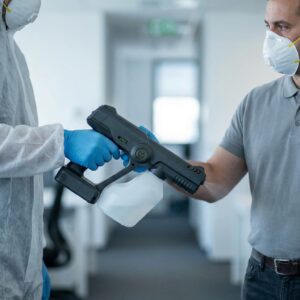
Our first line of defense against floodwater contamination is professional antimicrobial treatment. This isn’t household disinfectant spray. We use EPA-registered, hospital-grade antimicrobial solutions designed to penetrate porous materials where floodwater has carried contaminants deep into drywall, insulation, and subflooring.
When contaminated floodwater touches a surface, pathogens don’t stay on top. They migrate into the material itself. Standard surface wiping leaves behind colonies of bacteria and mold that continue multiplying in the moisture-rich environment. Our antimicrobial treatments work differently. We apply them using injection and fogging methods that reach into wall cavities, behind baseboards, and throughout structural voids where water has penetrated.
The products we choose matter enormously. We rely on antimicrobials that:
- Break down biofilms that bacteria use to protect themselves from disinfectants
- Remain effective on wet or damp surfaces (unlike many consumer products)
- Meet EPA standards for pathogen elimination without requiring long dry times
- Leave residual protection that continues working as materials dry
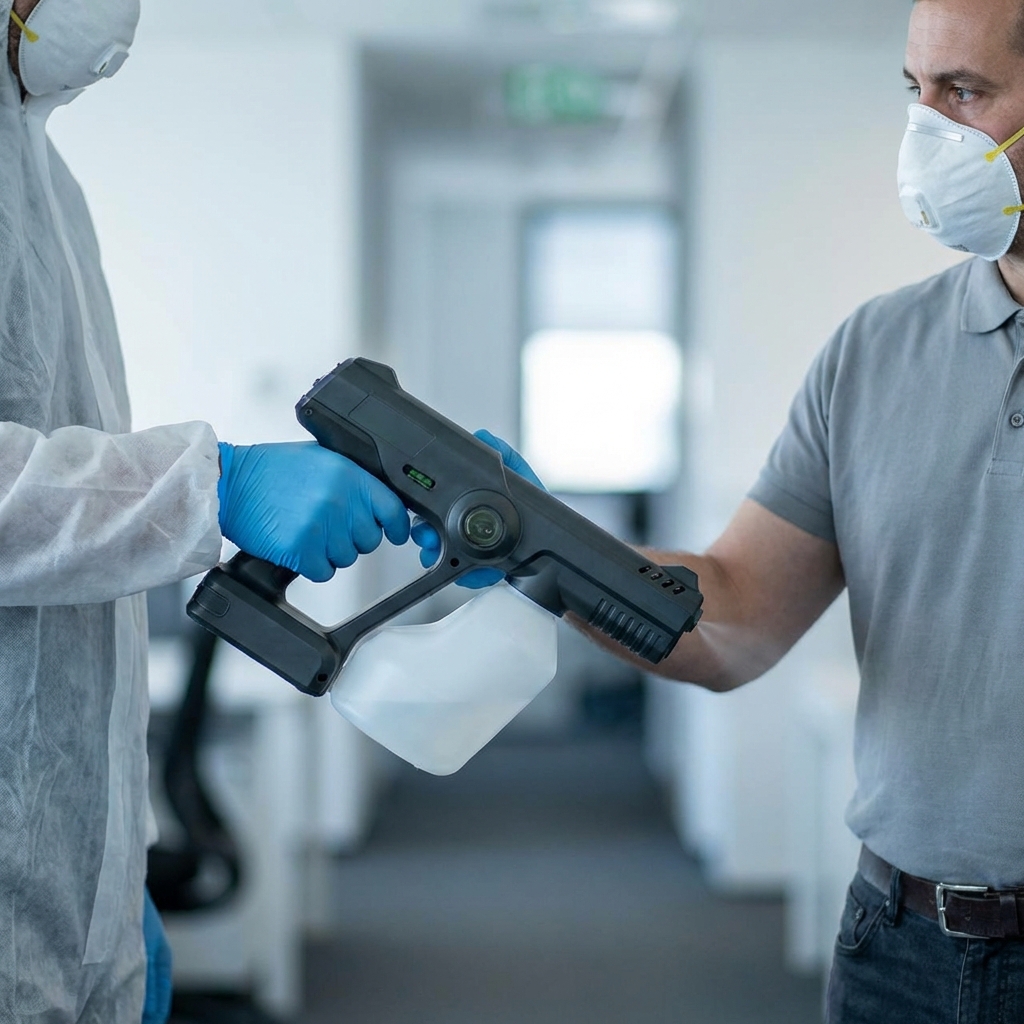
For severe flood contamination in commercial spaces, we often use electrostatic application technology. This allows us to coat every surface—including ceiling joists, ductwork, and electrical conduits—with antimicrobial protection in a single pass. It’s far more thorough than manual spraying and ensures consistent coverage that manual methods miss.
What to do next: If your property has been exposed to floodwater, don’t delay antimicrobial treatment. The longer contaminated materials remain untreated, the deeper pathogens establish themselves. Call us for immediate assessment and treatment.
Advanced Structural Drying Techniques
Moisture that lingers in structural materials creates the perfect environment for mold growth and odor development. Standard air circulation won’t reach trapped moisture hidden within wall cavities or beneath flooring. We use layered drying techniques that systematically remove water from every depth.
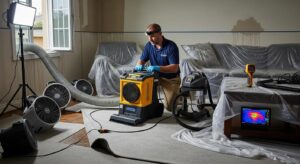
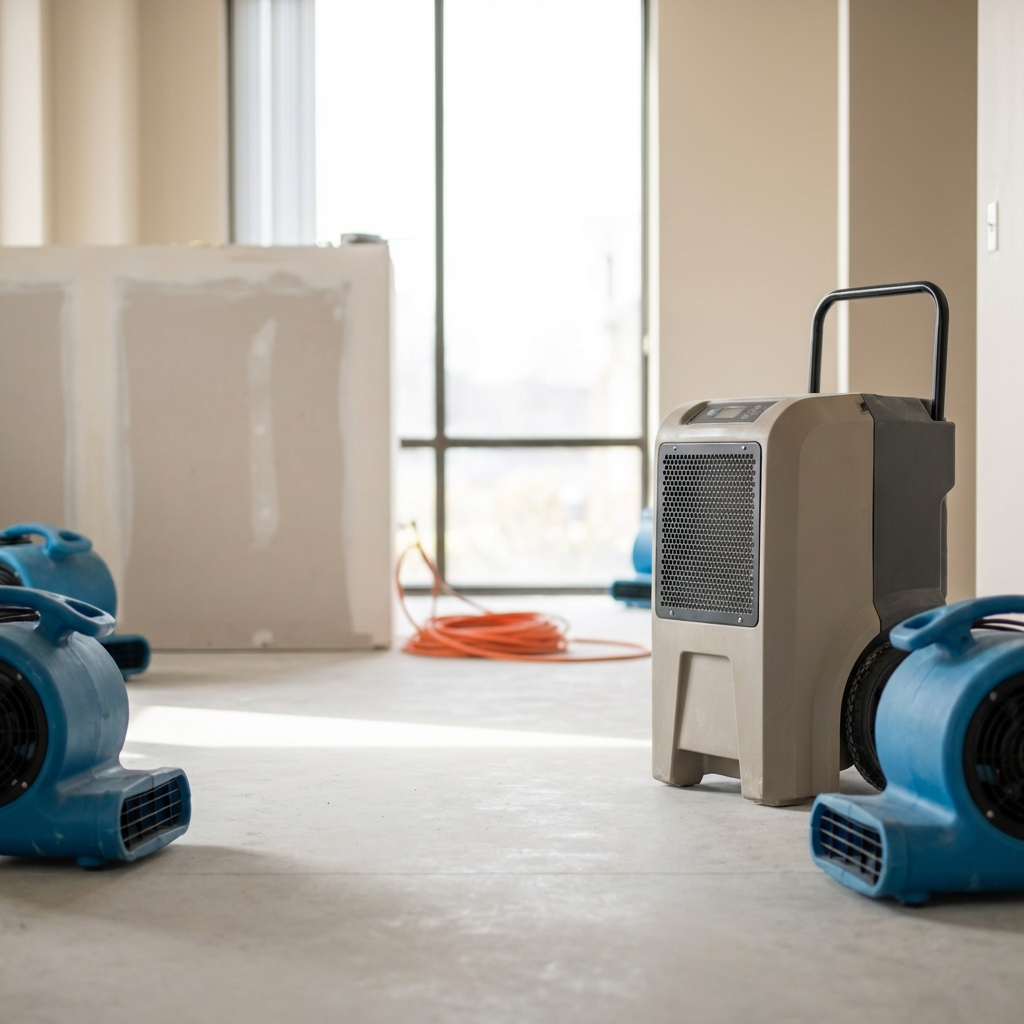
Our approach combines multiple drying methods working simultaneously. High-capacity dehumidifiers create negative pressure zones that pull moisture out of materials and into the air, where it can be captured and exhausted. Industrial-strength air movers direct warm, dry air across surfaces and into cavities, accelerating evaporation. Injectidrying systems (also called drying chambers) are placed into wall cavities to force dry air directly into spaces where standard equipment can’t reach.
The timeline matters. Structural materials begin developing mold within 24-48 hours of water exposure. If we wait too long or use inadequate equipment, you’re fighting a losing battle. We bring enough equipment that drying happens fast—typically completing structural drying in 3-7 days rather than weeks.
We also monitor this process constantly. Moisture meters tell us exactly how much water remains in different materials. Thermal imaging shows us where pockets of moisture are hiding. This isn’t guesswork. We know when drying is complete because the data confirms it, not because we assume it based on appearance.
For commercial properties, the stakes are higher. Business interruption costs money every single day your space is unusable. We prioritize rapid drying because we know restoration speed directly impacts your recovery timeline and financial loss.
What to do next: Request our moisture mapping service. We’ll identify exactly where water has penetrated, which materials are at highest risk for mold, and how long structural drying will take under professional equipment.
Industrial Ozone Sanitation Methods
Ozone is one of the most powerful odor eliminators available. Unlike fragrance-based products that mask smell, ozone actually destroys odor-causing molecules at the chemical level. It also kills mold spores, bacteria, and viruses that standard disinfectants struggle to reach in textiles and porous materials.
Here’s how it works: Ozone generators produce ozone gas, which we introduce into sealed spaces. The ozone reacts with organic compounds that cause odor—breaking them down into harmless byproducts. This process reaches into carpet fibers, furniture, insulation, and air ducts where odors accumulate. It works on contaminated materials that other methods can’t effectively treat.
Ozone treatment requires careful execution. The space must be sealed and vacant during treatment because ozone is a respiratory irritant at high concentrations. We establish airtight conditions, run the ozone generator for the precise duration needed for your specific contamination level, then ventilate the space completely before allowing reoccupancy. This isn’t something you can safely do yourself.
We typically deploy ozone treatment after antimicrobial application and structural drying have removed bulk contamination. Ozone finishes the job by neutralizing remaining odor molecules and addressing any residual microbial populations. For severe flooding cases or properties with lingering odors after initial remediation, ozone treatment is often the turning point that makes spaces truly odor-free.
In flood situations involving sewage-contaminated water (which happens during hurricane surge events), ozone treatment becomes essential. The organic compounds in sewage create particularly stubborn odors that require aggressive chemical treatment. We use ozone in these cases because it’s one of the few methods that reliably eliminates fecal odor and related pathogens.
What to do next: Ask whether your situation warrants ozone treatment. We’ll assess contamination severity and recommend this method if it’ll meaningfully improve your results.
HEPA Filtration and Air Purification
During flood restoration, the air in your building becomes contaminated with mold spores, bacteria, and moisture-laden dust. Without proper air management, you’re breathing harmful particles throughout the restoration process and beyond. We use medical-grade HEPA filtration to remove these contaminants from the air stream.
HEPA filters capture 99.97% of particles as small as 0.3 microns. That’s small enough to catch mold spores, bacterial particles, and dust that would pass through standard furnace filters. We deploy HEPA filtration in two ways: as intake filtration on dehumidifiers and air movers (so they’re drawing clean air, not circulating contamination), and as standalone air scrubbers that continuously purify the ambient air throughout restoration.
Air scrubbers are portable units with built-in HEPA filters and activated carbon layers. The activated carbon removes odor molecules while HEPA captures particulates. We position these strategically throughout your property based on contamination severity and airflow patterns. In commercial spaces, multiple units work together to ensure complete air turnover every few hours.
The health benefit is significant. Mold spores and bacterial particles cause respiratory irritation, allergic reactions, and exacerbate asthma. By filtering these contaminants during restoration, we protect both occupants and remediation workers. Continuous air purification also accelerates odor removal because odor molecules are being captured as they’re released from materials.
We also use ductwork cleaning and sealing as part of our air management strategy. Floodwater often contaminates HVAC systems. If untreated ducts then circulate air throughout your building, you’re spreading contamination everywhere. We access ductwork, remove contaminated material, apply antimicrobials, and seal ducts to prevent cross-contamination between cleaned and uncleaned spaces.
What to do next: Have your HVAC system inspected for contamination. If floodwater reached your furnace or air handler, ductwork likely needs professional cleaning and treatment before your system is safe to use.
Specialized Deodorization Protocols for Contaminated Materials
Some materials can’t be cleaned in place. Drywall saturated with floodwater, carpet soaked in contaminated water, and insulation that’s been exposed to mold require removal and replacement. But other materials—hardwood floors, wood cabinetry, tile, concrete—can be saved through specialized deodorization.
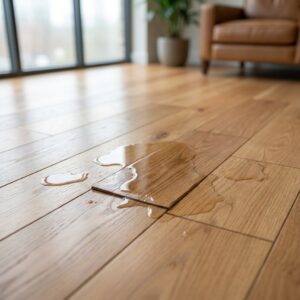
We use targeted protocols based on material type and contamination level. For hardwood floors, we apply wood-safe antimicrobials that penetrate the wood without causing swelling or discoloration, then use careful heat and humidity management to dry the wood gradually while the antimicrobial works. Concrete substrates receive deep-penetrating sealers that lock in odors and prevent re-contamination.
For materials you want to keep—furniture, artwork, personal items—we sometimes use specialized encapsulation sealers. These form a barrier that prevents odor molecules from off-gassing into the air. It’s not a permanent solution, but it buys time for deeper remediation to take effect while allowing valued items to remain in your space.
Textiles are particularly challenging. Carpet, upholstered furniture, and fabric-covered items absorb and hold contamination aggressively. In many cases, replacement is the only realistic option. But when items have high sentimental or monetary value, we explore professional deep cleaning, ozone treatment, and encapsulation combinations before recommending disposal.
The key insight most people miss: not every contaminated item needs to be thrown away, but some absolutely do. The material type, contamination level, and whether health hazards remain all factor into the decision. We assess these factors and guide you toward solutions that balance cost, health, and restoration goals.
What to do next: Document what you want to preserve before restoration begins. Photographs and lists help us prioritize which items receive specialized treatment versus removal.
Moisture Detection and Humidity Control
Visible water leaves when you pump it out. Hidden moisture in walls, under flooring, and in concrete slabs doesn’t. This trapped moisture is where odor persists, mold grows, and structural damage continues long after floodwater is gone. Detecting and controlling this moisture determines restoration success.
We use multiple moisture detection methods because different tools reveal different information. Pin-type moisture meters penetrate materials to measure internal moisture content. Non-invasive meters work through drywall to detect moisture without creating holes. Thermal imaging identifies cooler areas where moisture is evaporating, revealing moisture location in walls and cavities. Combined, these tools give us a complete picture of where water is hiding.
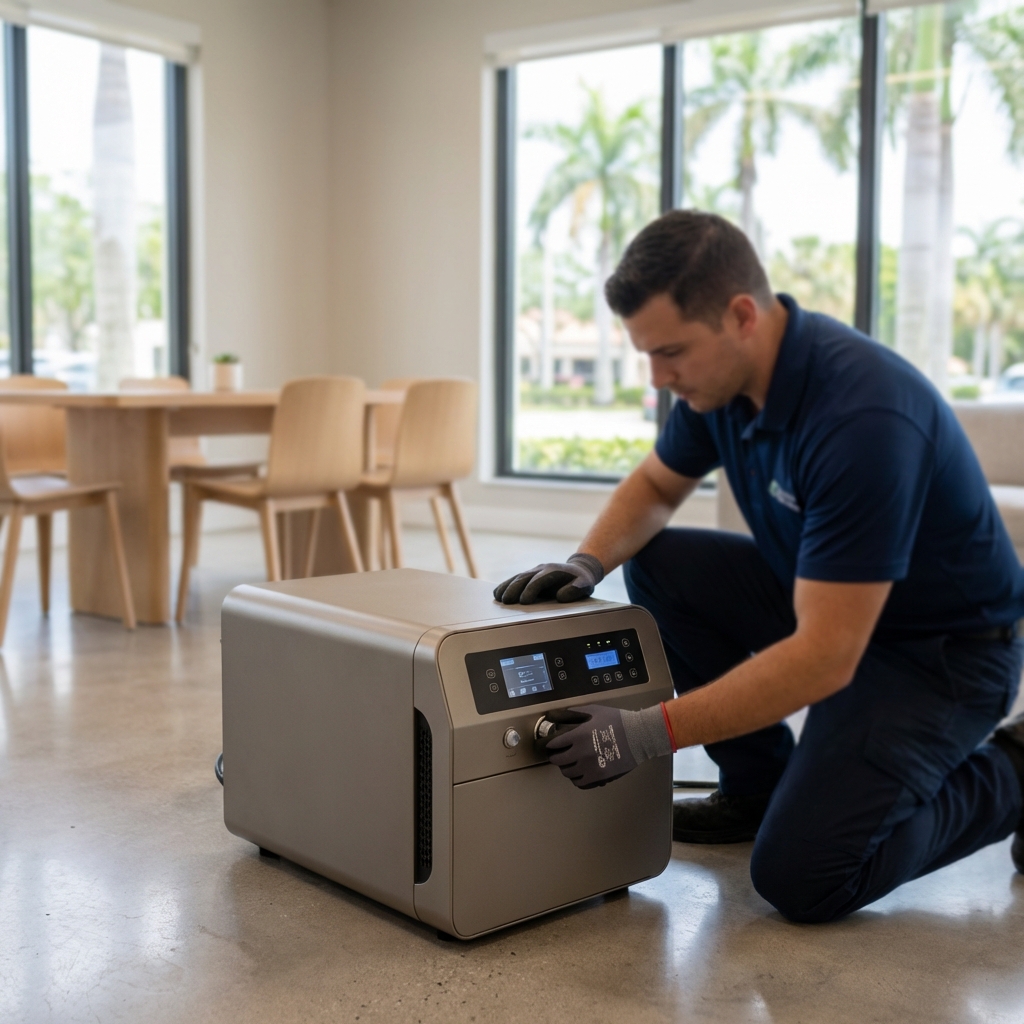
Humidity control is equally critical. When restoration is in progress, we maintain dehumidification systems that pull humidity out of the air as materials dry. Relative humidity should stay below 50% throughout restoration to prevent mold growth. Many property owners think “once the water is gone, drying happens naturally.” It doesn’t. Without active dehumidification, ambient humidity rises, materials dry slowly, and microbial growth accelerates.
We often deploy moisture barriers in crawl spaces and under building slab areas. Floodwater frequently enters these spaces during storm surge. Without moisture barriers, water vapor continues rising into living spaces through the building structure. These barriers, combined with dehumidification, stop this moisture migration.
Post-restoration, we help you maintain appropriate humidity levels. In South Florida’s humid climate, that often means running dehumidifiers seasonally or installing whole-building humidity control systems. Properties that maintain humidity below 50% have dramatically lower rates of mold recurrence and odor return.
What to do next: Invest in a quality hygrometer (humidity meter) for your property. Monitor it weekly. If humidity consistently runs above 55%, dehumidification systems will protect your restoration investment.
Post-Restoration Testing and Verification
Restoration is complete when testing confirms it, not when it looks and smells clean. We use objective testing protocols to verify that contamination is truly eliminated and that your space is safe for reoccupancy.
Our post-restoration testing includes:
- Air quality testing that measures mold spore counts, volatile organic compounds (VOCs), and particulate matter
- Surface swab testing for bacterial and mold presence on treatment-critical areas
- Moisture verification using meters and thermal imaging to confirm materials are dry
- Visual mold inspection under UV lighting to detect any remaining contamination
- HVAC system testing to ensure ductwork is clean and air handler is uncontaminated
These aren’t optional steps. They’re the only way to know your restoration is complete. We provide written reports documenting test results, comparing pre-restoration contamination to post-restoration baselines, and confirming that industry standards have been met.
For water damage restoration projects in Wellington, Miami, and across Palm Beach County, we also address insurance documentation. Testing results provide the evidence that supports insurance claims. They prove the scope of damage, validate the restoration methods we used, and document that remediation was thorough and professional.
Some property owners skip testing because they think “if it looks clean, it is clean.” This creates risk. Residual contamination that isn’t visible can reactivate, causing odor and mold to return months later. Testing eliminates this risk and gives you confidence that your space is truly restored.
What to do next: Request post-restoration testing as part of any restoration project. Budget for it upfront—it typically costs 10-15% of total restoration but prevents far more expensive problems if hidden contamination remains.
—
Floodwater disinfection and odor removal require systematic, layered approaches that address contamination at every level. We combine professional antimicrobials, advanced drying, ozone treatment, air filtration, specialized material protocols, moisture control, and verification testing because no single method fully addresses the complexity of flood damage.
Our experience across Palm Beach County teaches us that fastest recovery happens when remediation is comprehensive, equipment is industrial-grade, and every step is monitored and verified. When you’re facing emergency mold remediation or storm damage restoration, you need a partner who brings all these methods together strategically.
Contact us for 24/7 emergency restoration response. We’ll assess your specific situation, deploy the methods that will deliver results fastest, and verify completion through professional testing. That’s how we restore properties to truly clean, safe, odor-free condition.