Why Burst Pipes Damage Hardwood Floors Faster Than You Think
A burst pipe doesn’t just mean water pooling on your floor. For hardwood, it’s a race against the clock. We’ve responded to hundreds of burst pipe emergencies across Palm Beach County, and the difference between floors we save and floors we replace often comes down to what happens in those first few hours. Understanding the threat and taking immediate action can preserve your hardwood investment.
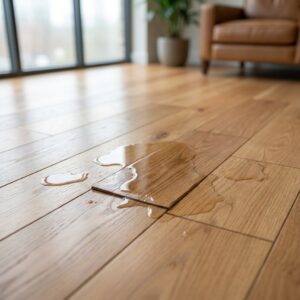
Hardwood is porous. Unlike tile or vinyl, water doesn’t sit on the surface and evaporate slowly. It soaks in. Once water penetrates the finish and enters the wood fibers, it causes the boards to swell and warp. This happens quickly, sometimes within 24 to 48 hours.
A burst pipe delivers continuous water pressure and volume. Unlike a slow leak you might notice over weeks, a sudden rupture floods entire rooms rapidly. The pressure can push water deep into subfloor cavities, underneath baseboards, and into the joist system beneath your flooring. By the time you notice standing water, saturation is already spreading where you can’t see it.
Temperature and humidity amplify the problem. Palm Beach’s warm, humid climate accelerates wood swelling and creates ideal conditions for mold growth within flooded wood. We’ve seen black mold colonies establish themselves in hardwood substructure within 48 hours of exposure. Once mold colonizes the wood, structural integrity fails and the floor becomes a health hazard.
The adhesive binding hardwood planks also breaks down when saturated. Moisture causes the glue to lose its grip, and boards begin separating at the seams. Finish coatings crack and peel. If water isn’t removed and the wood dried properly, cupping (edges raising higher than the center) and crowning (the reverse) become permanent deformities.
What to do next: If you suspect a burst pipe, shut off water at the main valve immediately and call us. Every hour matters.
The First 24 Hours: What You Must Do Immediately
The moment you discover water, your priority is stopping the source and preventing spread.
Turn off the water supply at the main shutoff valve. If you’re unsure where it is, locate it before an emergency happens. Most homes in Palm Beach have the shutoff near the street or in a utility closet. Don’t hesitate to call a plumber for this step if you can’t find it.
Stop using all water. Even if only one pipe burst, running showers, washing machines, or dishwashers adds volume to areas you’re trying to dry. Close all internal doors to contain the water to affected rooms and prevent saturation from spreading through your entire home.
Remove what you can safely move. Furniture, throw rugs, and personal items should leave the wet area immediately. Moisture wicking from wet hardwood into furniture will ruin it, and moving items creates space for proper drying equipment later.
Don’t attempt DIY extraction if water depth exceeds a quarter-inch. Most household shop vacs aren’t designed for standing water removal at scale, and moving water across your floor manually can push it deeper into subfloor cavities. We use truck-mounted extraction units that remove 95% of standing water in minutes, not hours.
Call us right away. We operate 24/7 and can dispatch a team within an hour throughout Palm Beach County. We’ll assess the water source, confirm the shut-off valve is engaged, and begin moisture extraction immediately. Delaying professional response to save money on the service call often costs ten times more in hardwood replacement later.
What to do next: Program our emergency line into your phone today. When you need water damage restoration, seconds count, and you won’t have time to search for help.
How We Assess Structural Damage to Your Hardwood Flooring
When we arrive, we don’t just look at what’s wet. We measure moisture content and map the damage beneath the surface.
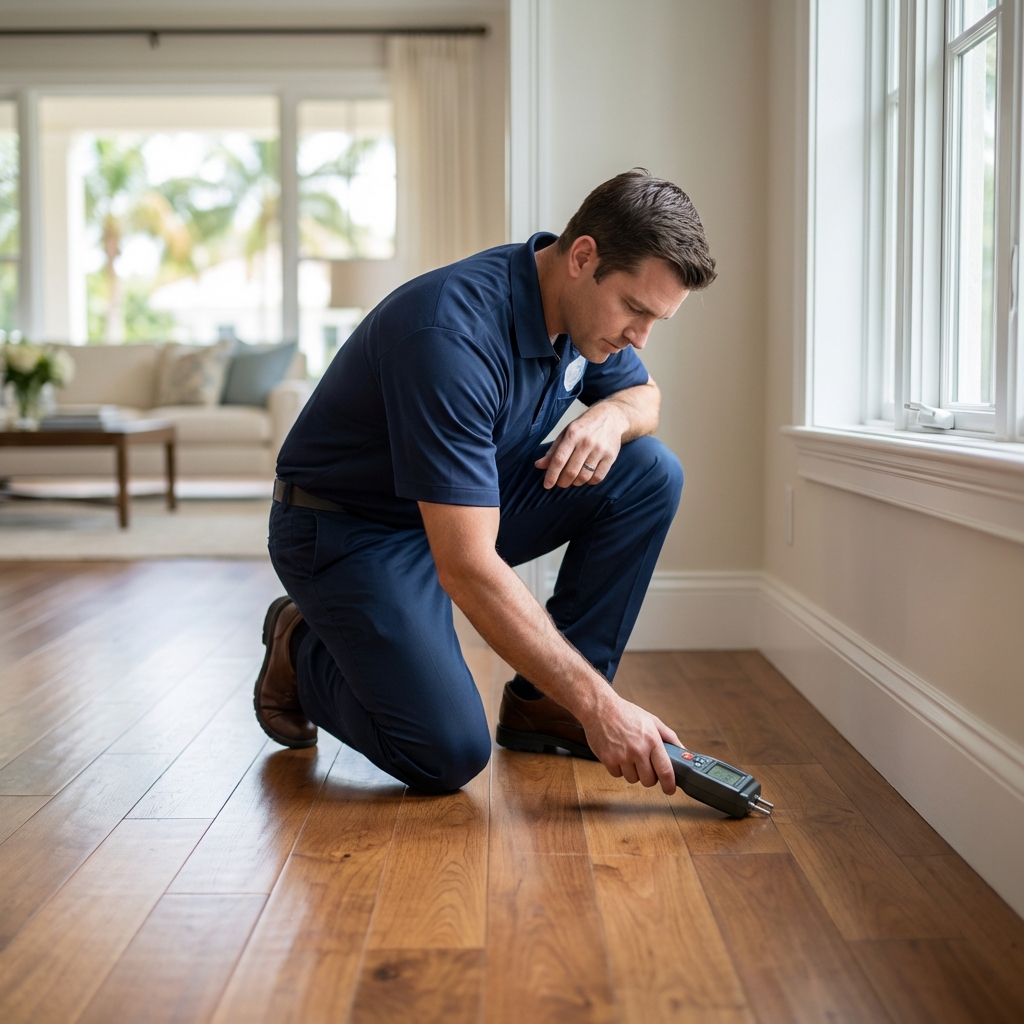
We use moisture meters to test the wood itself, the subfloor, and the base layer. These meters show us exactly how much water the wood has absorbed. Readings above 20% moisture content indicate saturation; anything above 30% usually means permanent structural failure. We take readings in multiple areas because moisture spreads unevenly. Water travels along subfloor joists and travels further along the grain than across it.
We check subfloor materials. Many Palm Beach homes sit on concrete slabs or wood subfloors with different moisture thresholds. Concrete can hide significant subsurface moisture that won’t show up on surface readings. If the subfloor has particle board, it loses structural strength rapidly when wet and may need replacement regardless of hardwood viability.
We look for mold. Sometimes it’s visible as discoloration or staining; often it’s not yet visible but moisture readings show conditions where mold will grow within hours. We photograph findings and document moisture readings at the time of assessment. This documentation becomes crucial for insurance claims and guides our restoration plan.
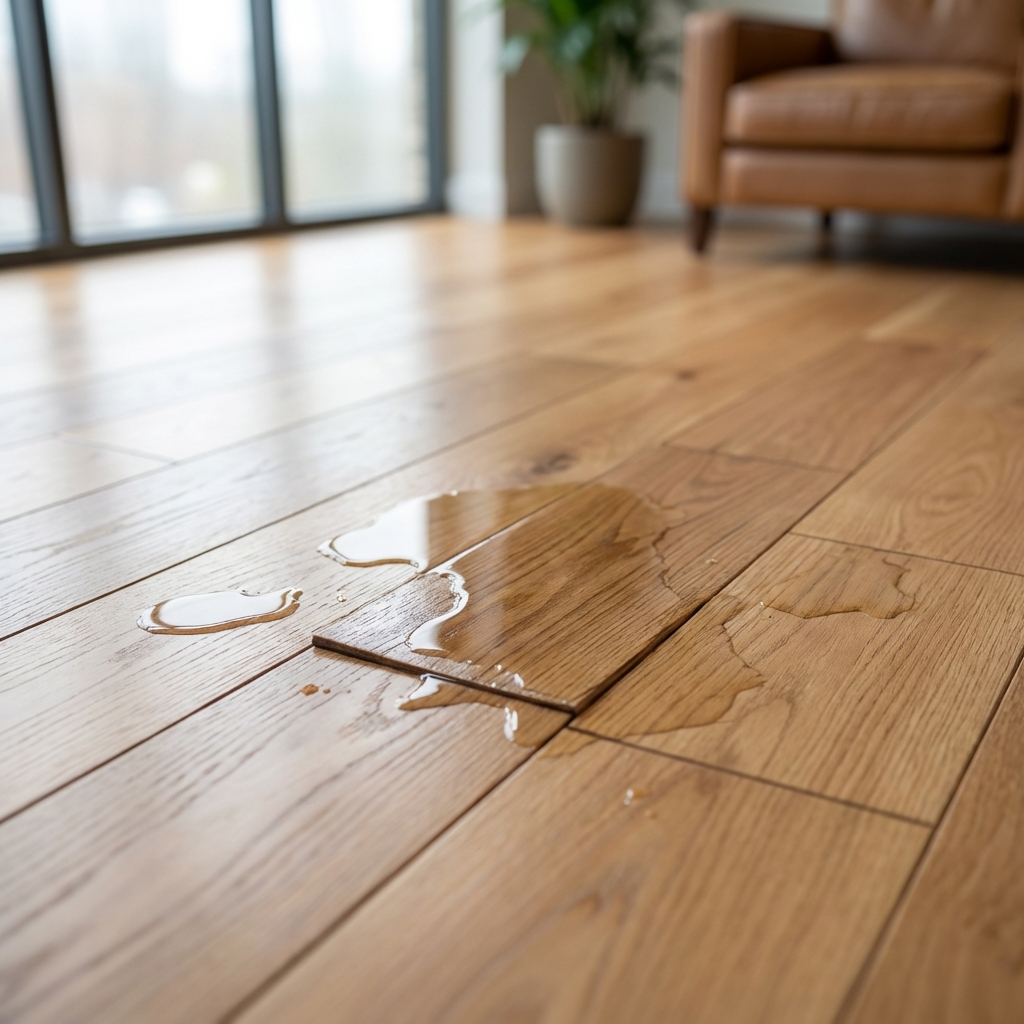
We inspect the adhesive and finish. Running our hands along seams, we can feel where the bond is already failing. We note cupping, crowning, and separation patterns. This tells us whether the flooring can still be flattened and refinished or whether boards have moved permanently.
What to do next: Request our full moisture assessment report. You’ll receive documented readings and photos of affected areas, which you can share directly with your insurance adjuster.
Professional Drying Techniques We Use to Save Your Floors
Extraction is step one. Drying is what actually saves the wood.
We position truck-mounted extraction units outside your home and run large-diameter hoses to affected areas. These units pull water from the surface and subsurface simultaneously. We make multiple passes, often removing hundreds of gallons in a single session. For a modest-sized room with hardwood damage, extraction typically takes 2 to 3 hours.
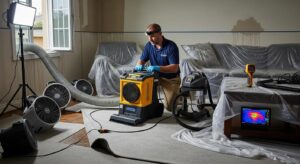
After extraction, we deploy industrial dehumidifiers and air movers. These aren’t consumer-grade equipment. Our dehumidifiers remove 200+ pounds of moisture from the air per day. Air movers dry hardwood surfaces and push moisture from subfloor cavities upward. We position equipment in a grid pattern, calculated to create airflow across all wet areas while avoiding uneven drying that warps boards.
We monitor moisture levels constantly. After initial extraction, we take readings every 6 to 8 hours for the first 48 hours, then daily for a week. We adjust equipment positioning based on moisture migration patterns. Some areas dry quickly; others stubbornly retain moisture. Our technicians know where moisture hides and how to reach it.
We use targeted heat when appropriate. Controlled temperature increases accelerate drying without shocking the wood. In humid conditions, we may slightly elevate temperature while dehumidifying to speed evaporation. We’re careful not to dry too quickly, as rapid moisture loss can cause worse warping than slow saturation.
For subfloor cavities, we sometimes need to cut access holes in flooring or baseboards to insert drying equipment directly. It’s invasive, but it prevents hidden moisture pockets that lead to delayed mold growth. We repair these holes or replace affected sections once the structure is dry.
What to do next: Ask us about our moisture guarantee. We document when wood reaches safe moisture levels (typically 12% or below) and provide written confirmation before moving to refinishing.
Mold Prevention During the Restoration Process
Mold thrives in damp, warm environments. Palm Beach’s climate means mold can colonize wood within 48 hours of water exposure. Prevention is part of our drying strategy, not something we handle afterward.
We use antimicrobial treatments on hardwood and subfloor surfaces as moisture content drops to safe levels. These treatments prevent spore germination without requiring harsh chemicals that damage wood finish or create health concerns. We apply them before mold has a visible foothold.
We maintain airflow constantly. Stagnant air in closed rooms accelerates mold growth. Our air movers stay running throughout the drying period. We open windows when outdoor humidity is lower than indoor humidity, creating natural air exchange. When exterior conditions are too humid, we keep windows closed and rely on mechanical dehumidification.
If we discover active mold during assessment, we don’t just dry over it. We address it before drying begins. Light surface mold on hardwood can sometimes be cleaned and treated. Mold that has penetrated deeply into wood or colonized subfloor materials typically requires removal and replacement of affected sections. This is why professional assessment matters; homeowners often don’t realize their mold problem is worse than it appears.
We use containment protocols if mold removal is necessary. We seal off work areas with plastic barriers, use negative air pressure systems to prevent spore dispersal into healthy areas, and dispose of contaminated materials in sealed bags. This isn’t standard water damage work; it’s remediation, and we handle it according to industry standards.
What to do next: Don’t assume mold is invisible. If you smell a musty odor after water damage, mold is likely present. Request a professional mold assessment as part of your water damage restoration.
Insurance Claims: How We Help You Get Full Coverage
Insurance claims for hardwood floor water damage require detailed documentation. We handle this from day one.
We photograph everything before work begins. Wide shots showing room extent, close-ups of affected flooring, moisture meter readings, and evidence of saturation. These images become part of our scope of work and support your claim. Adjuster offices receive thousands of claims; clear evidence moves yours through faster.
We provide written damage assessment reports that list moisture readings, affected square footage, affected materials (hardwood, subfloor, padding), and recommended restoration approach. This report becomes the foundation of your claim. We specify whether we can save the hardwood or recommend replacement, and we include cost estimates for each approach.
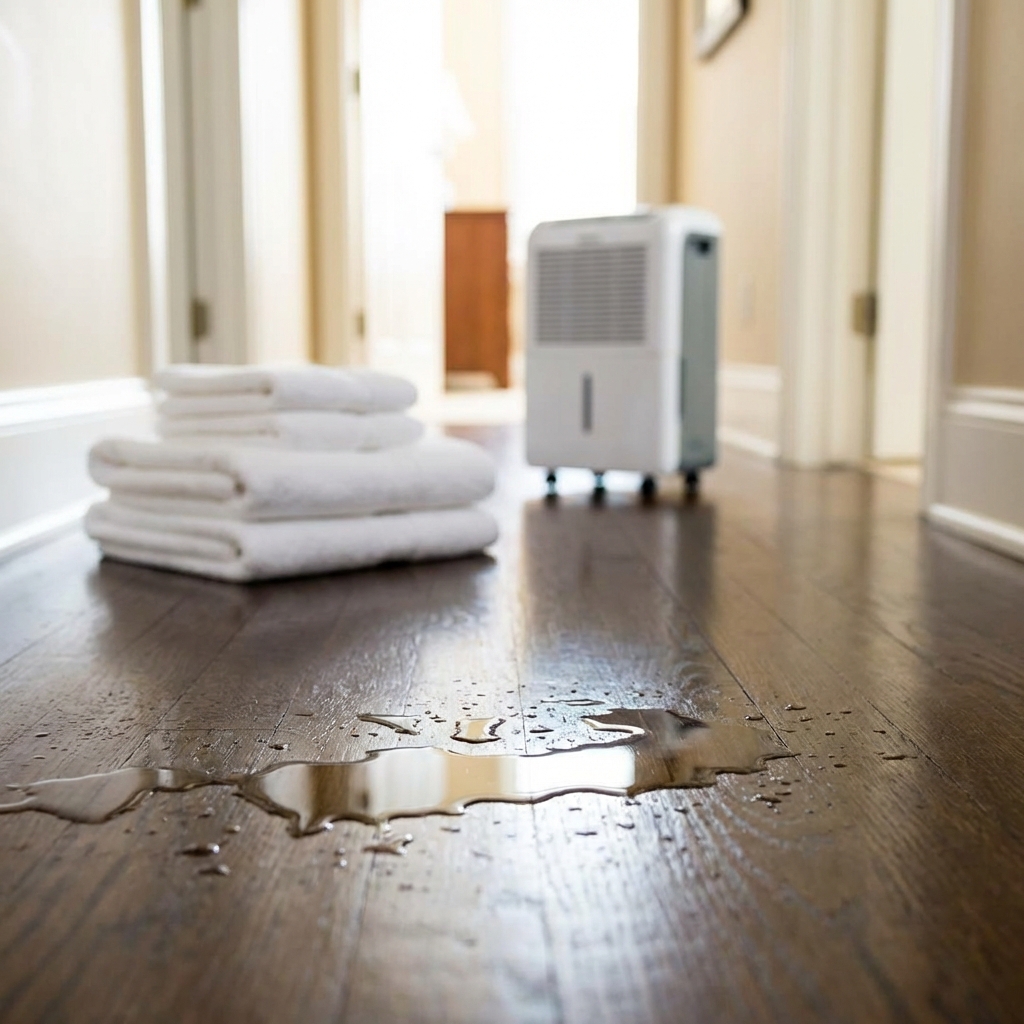
We document all equipment deployment and service hours. We track when we arrived, when extraction began, how long equipment ran, when moisture readings were taken, and when materials reached safe levels. This detailed timeline shows the adjuster exactly what was done and why it was necessary.
We communicate directly with insurance adjusters on your behalf. When the adjuster visits, we provide readings and explain findings. Many adjusters aren’t familiar with professional drying protocols; we help them understand why 10 days of dehumidification costs thousands but saves ten times that in hardwood replacement.
If the claim is denied or underfunded, we provide supporting documentation for appeal. We’ve helped property owners overturn denials by showing that the damage scope matched our assessment and that our approach was industry-standard.
What to do next: Don’t settle a claim before talking to us. Call us before the adjuster visits, and we’ll ensure your damage is properly documented and your claim is accurate.
When Hardwood Floors Can Be Saved vs. When Replacement Is Necessary
Not all water-damaged hardwood can be restored. Knowing the difference saves you from investing in futile drying efforts.
Floors can usually be saved if moisture content is below 25% and exposure time is under 48 hours. Even swollen or cupped boards often flatten as the wood dries, especially if the finish isn’t cracked. Once we dry the structure completely, we can sand the floor and refinish it. The hardwood remains structurally sound.
Floors with moisture above 30% or exposure over 72 hours are candidates for replacement. At that saturation point, wood strength is compromised. The subfloor may have failed adhesive. Drying may be possible, but the floor won’t support normal foot traffic long-term. The cost of drying and then replacing floors anyway exceeds the cost of replacement alone.
If mold has colonized the subfloor or the wood shows active fungal growth, replacement becomes necessary. We cannot guarantee future stability in wood that’s had significant mold exposure, even after treatment. New wood and subfloor eliminate this risk.
If hardwood is glued-down and separation has already begun, salvage is unlikely. The adhesive failure is permanent, and glue-down installations don’t flatten like floating hardwood does. We recommend replacement.
Solid hardwood in a floating installation sometimes survives when engineered hardwood or glue-down installations do not. Floating floors allow the wood to move and settle as it dries. Glued installations trap moisture and restrict drying.
We’ve saved hardwood in homes where water exposure was caught within hours. We’ve seen irreplaceable vintage hardwood restored after a week of intensive drying. But we’re also honest when replacement is the only safe option. Our assessment guides this decision; we won’t charge you for drying work that won’t succeed.
What to do next: Get our assessment in writing. If replacement is recommended, ask us for referrals to hardwood installers in Palm Beach County who can match your existing floor.
Our 24/7 Emergency Response for Burst Pipe Water Damage
A burst pipe doesn’t happen during business hours. We operate 24/7 because water damage doesn’t wait for morning.
When you call at 2 AM on a Sunday, you reach our dispatch team immediately. You don’t get an answering service or a callback promise. We ask essential questions: where is the water, how much is there, have you shut off the main water supply? Based on your answers, we dispatch our nearest available team and provide an arrival window.
Our crews carry full extraction and drying equipment in their vehicles. We don’t need to return to a warehouse for gear. When we arrive, we can begin water removal within minutes. We set up dehumidifiers and air movers immediately; we don’t wait for a second truck or additional staff.
We maintain strategic locations throughout Palm Beach County so response times stay under an hour even from remote areas. Whether you’re in Wellington, Lake Worth, or central West Palm Beach, we’re nearby when you need us.
Our team works around your schedule. Some homeowners need to leave for work; we can arrange access, set up equipment, and monitor everything remotely. We check moisture levels, adjust equipment, and keep you updated via phone or email. You don’t need to stay home or babysit the drying process.
We handle the cleanup too. Once the hardwood is dry and drying equipment is removed, we vacuum up any debris, wash floors, and return your home to livable condition. You shouldn’t have to clean up after water damage.
What to do next: Save our number in your phone today. When a pipe bursts at midnight, you’ll be glad you did.
Why Professional Water Extraction Beats DIY Methods
We understand the impulse to grab a shop vac and handle water yourself. In most cases, DIY extraction makes the problem worse.
Shop vacs are designed for dry debris, not standing water. Their filters clog rapidly when wet, which stops suction. Their capacity is small (usually 5 to 10 gallons), so you’re emptying constantly while water sits. More importantly, they draw water from the surface only; subsurface water remains trapped, continuing to saturate the wood.
Our truck-mounted extraction units move thousands of gallons per hour. A single session removes 80 to 95% of standing water and much of the absorbed moisture. Shop vacs remove maybe 20% of total water in your home.
DIY extraction often spreads water. Pushing a shop vac across wet hardwood forces water into grout lines, under baseboards, and deeper into subfloor cavities. Water follows the path of least resistance, and manual extraction often creates that path by moving surface water before subsurface water is drained. We use hoses and equipment designed to extract systematically without spreading saturation.
Dehumidifiers from hardware stores have low capacity (25 to 50 pounds per day). Industrial dehumidifiers remove 200+ pounds per day. A hardware store dehumidifier in a large room with major water damage is like using a straw to empty a swimming pool. Professional drying reaches safe moisture levels in days, not weeks.
Delayed mold growth is the silent cost of DIY attempts. Homeowners often think water is gone because the floor looks dry. But if subsurface moisture remains, mold is establishing itself in hidden spaces. By the time visible mold appears, the structural damage is permanent.
Cost-wise, a DIY extraction attempt that misses subsurface water adds thousands to your eventual restoration bill when professional crews must deal with mold and structural damage that could have been prevented.
What to do next: Call us instead. Our emergency extraction service costs less than most people expect, and it protects the far greater investment in your home and hardwood.
Restoration Timeline: What to Expect From Start to Finish
Understanding the timeline helps you plan your life around water damage recovery.
Day 1: Our team arrives and extracts standing water (2 to 4 hours). We assess moisture levels, deploy dehumidifiers and air movers, and establish a drying protocol. We provide you with a written timeline and daily schedule.
Days 2 to 4: Equipment runs continuously. We take moisture readings every 6 to 8 hours and adjust equipment as needed. Most accessible hardwood reaches safe moisture levels by day 4. Subfloor materials may need longer.
Days 5 to 7: We continue drying any remaining moisture pockets, particularly in subfloor areas. We take daily readings and begin planning for refinishing if the hardwood will be saved. If mold remediation is necessary, we complete that process while drying continues.
Day 8 to 10: Once moisture levels stabilize below 12%, we remove drying equipment. We clean and vacuum all affected areas. If hardwood will be saved, we may schedule sanding and refinishing to begin immediately.
Weeks 2 to 4: Hardwood sanding and finishing (if applicable). This depends on your floor’s square footage and condition. Most jobs complete within 2 weeks of water removal.
Insurance claim processing runs parallel to all this. We’ve submitted documentation and photos by day 2. Adjusters typically visit days 5 to 7. Most claims resolve within 2 weeks.
For homes needing hardwood replacement, the timeline extends. We coordinate with hardwood installers and handle subfloor repair or replacement as needed. New hardwood installation typically adds 2 to 3 weeks to the total process.
Throughout this timeline, we keep you updated. You receive moisture readings, photos of progress, and regular calls. You’re not left wondering what’s happening or when you can return to normal.
What to do next: Plan ahead by understanding this timeline. If a burst pipe floods your home, you now know what professional restoration looks like and why it protects your investment better than any DIY approach ever could.
We’re here when you need us. Call SuperClean Restoration at any hour for emergency water damage restoration in Palm Beach County. We’ll assess your hardwood, explain what can be saved, and get your home dry and clean as fast as professional work allows.