Understanding Mold Removal and Remediation Essentials
At the heart of both HEPA vacuums and air scrubbers is the High-Efficiency Particulate Air (HEPA) filter. This advanced filtration system is not simply a fine screen; it’s a complex web of randomly arranged glass fibers that create a tortuous path for air to flow through. HEPA filters are engineered to capture at least 99.97% of airborne particles that are 0.3 microns in size. This specific particle size is considered the most difficult to trap, making HEPA filters exceptionally effective against a wide range of microscopic particles, including mold spores, which typically range from 3 to 40 microns.
The capturing process within a HEPA filter occurs through a combination of three mechanisms:
Impaction: Larger particles, due to their inertia, are unable to follow the curving air stream around the filter fibers and collide directly with them.
Interception: Mid-sized particles, while following the airflow, come into close enough contact with a fiber to become ensnared.
Diffusion: The smallest particles move in an erratic, random pattern, increasing their likelihood of colliding with and sticking to the filter fibers.
This multi-faceted approach ensures that even the tiniest mold spores are effectively removed from the air that passes through the filter, providing comprehensive mold cleanup capabilities that go beyond what standard mold removers can achieve.
HEPA Vacuums: Targeted Mold Removal from Surfaces
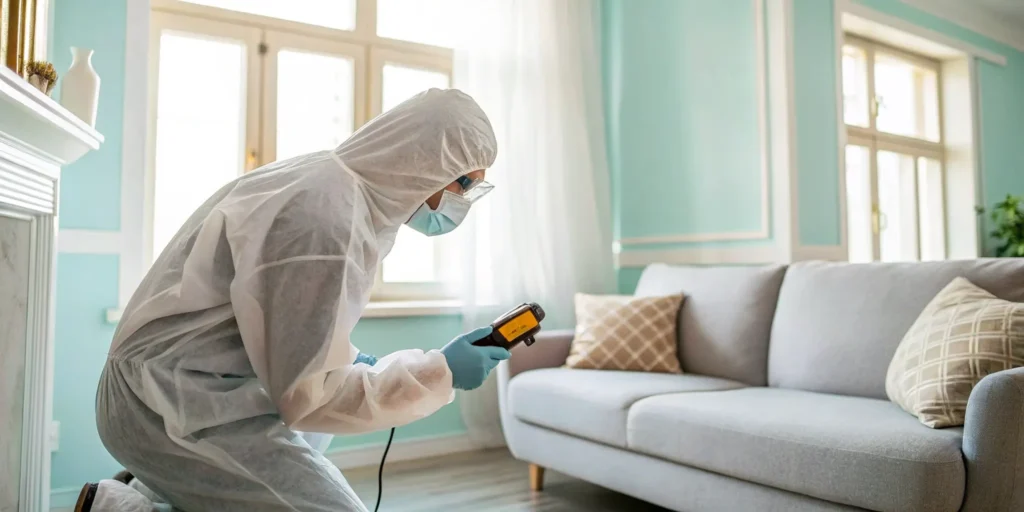
During a mold remediation project, disturbing mold-infested materials can release a massive number of spores into the air. A HEPA vacuum is crucial for the initial and final stages of cleaning moldy surfaces and other contaminated areas. Unlike a standard vacuum cleaner, which lacks the filtration necessary to trap microscopic mold spores, a HEPA vacuum is designed with a sealed system that prevents these captured particles from being expelled back into the environment.
Why Regular Vacuums Create Hazards When Cleaning Moldy Areas
Using a conventional vacuum cleaner on a mold problem is one of the most significant mistakes one can make during home maintenance or mold cleanup efforts. The filters in standard vacuums are not fine enough to capture mold spores. Instead, the vacuum’s powerful exhaust acts like a high-speed fan, effectively aerosolizing the spores and dispersing them throughout the room and potentially the entire building. This can turn a localized mold issue into a widespread contamination problem, increasing the risk of respiratory issues and allergic reactions for occupants.
When attempting to remove mold from visible surfaces, it’s essential to use proper equipment rather than relying on basic mold removers or attempting to clean moldy surfaces with inadequate tools. Hidden mold behind walls or under flooring requires even more careful attention during remediation to prevent cross-contamination.
Air Scrubbers: Comprehensive Mold Remediation for Your Home
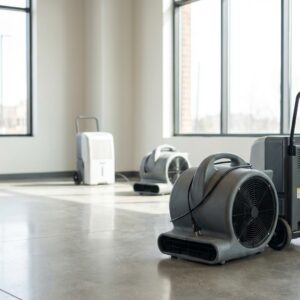
While HEPA vacuums are indispensable for cleaning surfaces, air scrubbers are the workhorses for cleansing the ambient air in your home during mold removal projects. These powerful machines draw in large volumes of air from the contaminated space, pass it through a series of filters, including a HEPA filter, and then exhaust the clean, filtered air.
Air scrubbers are typically run continuously throughout a mold remediation project to:
Capture Airborne Spores: As mold-damaged materials are removed, spores become airborne. Air scrubbers work to capture these free-floating particles, preventing them from settling on moldy surfaces or other clean areas where they could establish new growth.
Create Negative Air Pressure: In professional remediation, air scrubbers are often configured to create negative air pressure within the containment area. This is achieved by ducting the scrubbed air to the outside of the containment zone. This pressure differential prevents contaminated air and airborne spores from escaping the work area and spreading to other parts of the building, protecting your home from further contamination.
The Danger of Using Standard Fans for Mold Cleanup
Attempting to ventilate a mold-contaminated area with standard fans is another critical error in home maintenance. Much like a regular vacuum, a fan will simply blow the mold spores around, spreading them to new areas where they can settle and begin to grow if moisture is present. This not only exacerbates the contamination but also increases the inhalation risk for anyone in the vicinity. Unlike products like mold armor or specialized stain removers designed for mildew stains, standard fans offer no filtration and can worsen the problem significantly.
Professional Mold Removal: Beyond Basic Mold Removers
The safe removal of mold is a scientific process that relies on specialized technology. While consumer products like mildew removers can clean minor surface stains, they cannot capture the real threat: microscopic airborne spores. Professional HEPA vacuums and air scrubbers are precision tools designed to contain these invisible threats, something household equipment cannot do.
Using professional-grade technology is essential for truly effective mold cleanup. Proper HEPA filtration protects your family’s health by ensuring the problem is fully eliminated, not just hidden from view.
We use the right technology for the job. Don’t settle for a surface-level fix. Our team uses professional-grade HEPA air scrubbers and vacuums to capture airborne spores and eliminate mold at its source. Contact SuperClean Restoration Services today.
Call for a Professional Solution: 844-888-0837
Email for an Estimate: Info@supercleanrestorationpb.com