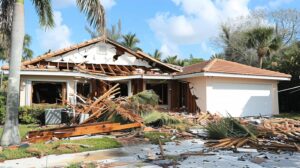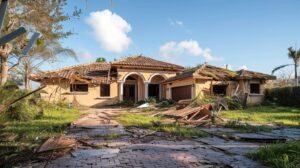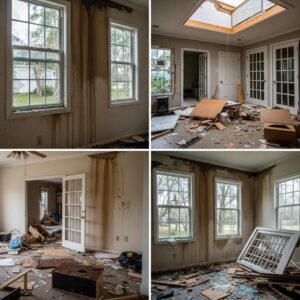
The storm has passed, the winds have died down, but for Florida homeowners, the most critical clock has just started ticking.
In the aftermath of a hurricane, we often see a dangerous misconception take hold: the belief that if you don’t see standing water, you’re safe. But in Palm Beach County’s climate, where humidity averages above 70%, the air itself acts as a fuel source for microbial growth.
You aren’t just battling water; you are battling time. According to Florida Health and IICRC standards, mold spores activate within 24 hours of moisture exposure. By 48 to 72 hours, visible colonies begin to form. This isn’t just about aesthetics—it’s about the structural integrity of your property and the respiratory health of your family.
You are likely evaluating your next move right now. Should you handle this yourself with shop vacs and bleach? Do you need to file an insurance claim? Which professionals are actually qualified to handle this?
This guide moves beyond generic advice to provide the specific, technical frameworks you need to make safe, financially sound decisions for your property.
The “Category 3” Reality: Why Hurricane Water is Different
If your water damage came from a burst pipe on the second floor, that is generally “clean water.” Hurricane flooding is fundamentally different.
Storm surge and rising floodwaters are classified by the IICRC S500 Standard as Category 3 (Black Water). This water is grossly unsanitary, carrying:
- Sewage and bacteria
- Heavy metals and pesticides
- Brackish water salinity
The Evaluation Implication: You cannot “dry out” porous materials touched by Category 3 water. Drywall, carpets, and padding that have absorbed storm surge must typically be removed, not restored. Attempting to dry these materials in place often traps bacteria and mold deep within the substrate, leading to “sick building syndrome” weeks later.
Diagnosis: Is It a Water Stain or Active Mold?
One of the most common questions we field at SuperClean Restoration is from homeowners staring at a discoloration on their ceiling or drywall. “Is this just a stain from the leak, or is mold growing already?”
Visible growth is only the tip of the iceberg. In Florida homes, mold often grows on the back of the drywall (inside the wall cavity) where humidity is trapped, feeding on the paper backing of the gypsum board. This is where professional diagnostics—specifically thermal imaging and moisture mapping—become essential. We use infrared technology to detect temperature differentials that indicate evaporation, revealing wet pockets behind “dry” looking walls.
Use this framework to assess what you are seeing:
The High-Stakes Decision: Saving Hardwood Floors
For many Palm Beach residences, hardwood flooring represents a massive financial investment. When these floors are exposed to water, the instinct is often to panic. However, not all wet floors are lost.
The outcome depends heavily on the subfloor (concrete vs. wood) and the speed of intervention. Wood is hygroscopic—it absorbs moisture from the air and the subfloor. In Florida, where concrete slabs are common, moisture can become trapped between the slab and the wood, causing “cupping” (edges rise) or “crowning” (center rises).
Can they be saved?
If the water was Category 1 (clean) or 2 (gray) and you intervene within 24-48 hours with specialized injectidry systems (mats that pull moisture through the wood), salvage is often possible. If the water was Category 3 (storm surge), or if the wood has buckled (detached from the subfloor), replacement is usually the only option to ensure no mold remains beneath the planks.
The “Bleach Myth” and Proper Remediation Protocols
If you take only one piece of advice from this guide, let it be this: Do not use bleach to kill mold on porous surfaces.
This is a dangerous myth that persists despite EPA warnings. Bleach has a high surface tension, meaning it sits on top of porous materials like drywall and wood. While the chlorine evaporates (bleaching the color of the mold), the water component of the bleach soaks into the material, actually feeding the root system of the mold (hyphae). You are essentially watering the mold while hiding the visual evidence.
The Professional Standard (IICRC S520)
True remediation requires:
- Containment: Setting up negative air pressure chambers to prevent spores from spreading to clean areas of the house during work.
- Removal: Physically removing mold structures (not just killing them) using HEPA vacuums and abrasive cleaning.
- Antimicrobials: Using EPA-registered biocides designed to penetrate substrate, not just surface cleaners.
Florida Statute 468: Your Legal Protection
The restoration industry in Florida is strictly regulated, yet many out-of-state “storm chasers” ignore these laws. Under Florida Statute Chapter 468, there is a mandated separation between Mold Assessment and Mold Remediation.
To prevent conflicts of interest, the company that tests your home for mold (the Assessor) generally cannot be the same company that cleans the mold (the Remediator) on the same project, unless specific disclosure waivers are signed.
Why this matters to you:
If you hire an unlicensed handyman to cut out moldy drywall, you may void your insurance coverage. Insurance carriers look for reasons to deny claims; “negligent repair by unlicensed contractors” is a common denial code. SuperClean Restoration strictly adheres to FS 468, working alongside independent Hygienists who verify our work is done to standard.
Documentation: The Key to Insurance Approval
Insurance adjusters are overwhelmed post-hurricane. To get your claim approved, you need irrefutable proof. “It smelled musty” is not proof.
We provide our clients with data-driven documentation, including moisture content readings, thermal imagery, and psychrometric logs (measuring temperature and humidity daily). This proves that the damage was storm-related and that the mitigation steps taken were necessary.
The SuperClean Difference
When disaster strikes the Palm Beaches, you don’t just need a cleanup crew; you need a strategic partner who understands the local environment. Founded by Bradley Vercosa, whose experience spans from Hurricane relief across the Gulf Coast to recovery operations at the Pentagon and World Trade Center, SuperClean Restoration brings elite-level discipline to residential care.
We don’t just extract water; we restore confidence.
If you suspect hurricane-induced mold growth, do not wait for the colonies to become visible. Contact SuperClean Restoration of The Palm Beaches immediately. Our rapid response team is ready 24/7 to secure your property and protect your health.
Frequently Asked Questions
Q: Can I stay in my home during mold remediation?
A: It depends on the extent of the damage. If the mold is contained to a small area and we can establish negative pressure containment, you may be able to stay. However, if the HVAC system is compromised or if it is a “whole home” impact, we typically recommend temporary relocation for your safety.
Q: Why is my insurance company delaying my water damage claim?
A: Delays often stem from a lack of “Cause and Origin” evidence. If the adjuster cannot clearly distinguish between wind-driven rain (covered) and rising flood water (requires flood insurance), they pause. Our detailed moisture mapping helps clarify the water source to expedite this process.
Q: How do I know if the mold is “toxic”?
A: The term “toxic mold” usually refers to Stachybotrys chartarum (Black Mold), which produces mycotoxins. However, you cannot identify mold species by sight. This is why we recommend independent air quality testing by a licensed Mold Assessor to confirm the spore count and toxicity levels before and after our work.