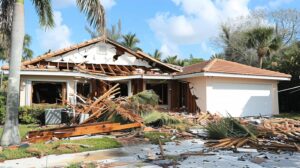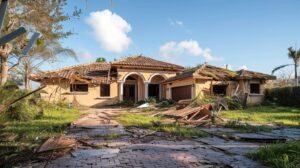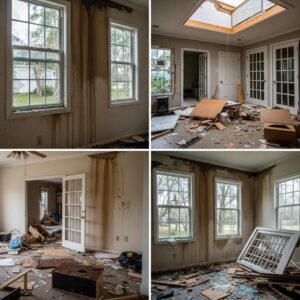
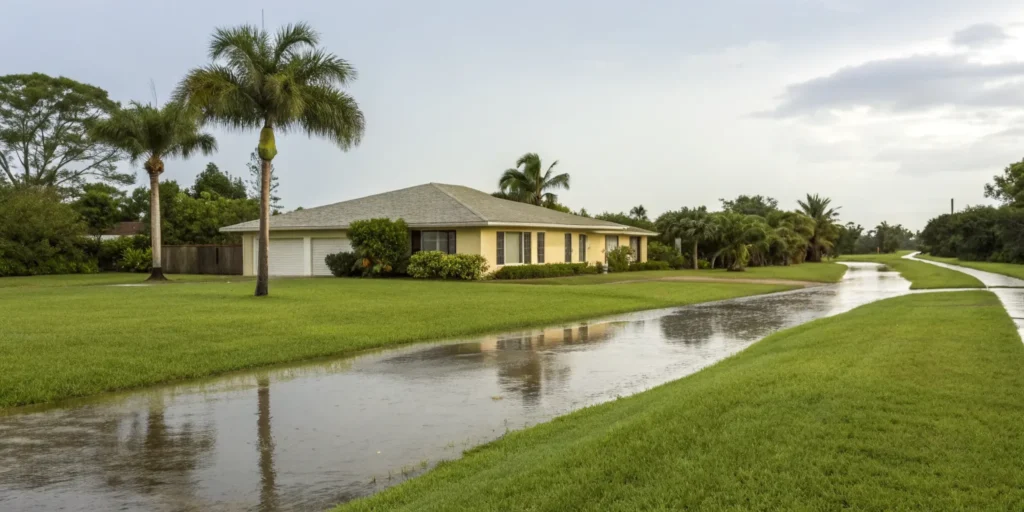
When a hurricane sweeps through Palm Beach County, the immediate aftermath is visible chaos: standing water, debris, and structural damage. But for property owners in Wellington and West Palm Beach, the most expensive threat isn’t the water you see—it’s the moisture you can’t.
If you are currently evaluating restoration partners, you have likely moved past the initial shock and are now facing critical decisions about preserving your property’s value. You may be hearing conflicting advice: some contractors suggest a simple “extract and fan” approach, while others advocate for aggressive structural drying.
This guide moves beyond surface-level cleanup checklists. Here, we break down the engineering and science required to properly mitigate hurricane damage, ensuring your property is safe, your insurance claim is defensible, and your structural integrity remains intact.
The Hurricane Difference: Why This Isn’t a Pipe Burst
In the restoration industry, not all water is created equal. A burst supply line on the second floor releases “clean” water. A hurricane surge or flood event, however, introduces complexities that standard cleaning crews often overlook.
According to the IICRC S500 Standard (2021)—the governing body for our industry—floodwater is almost invariably classified as Category 3 (Black Water). This means the water is “grossly contaminated” and can contain heavy metals, raw sewage, and harmful pathogens.
Why does this distinction matter for your evaluation process? Because Category 3 water changes the rules of engagement. You cannot simply dry a carpet saturated with storm surge; porous materials must often be removed, and semi-porous materials require specialized antimicrobial protocols to ensure safety.
The 48-Hour Biological Clock
Time is the single most critical variable in disaster recovery. While visible mold colonies typically appear within 24 to 48 hours, the internal damage escalates even faster. In the high heat and humidity typical of a Florida post-storm environment, a Category 1 loss (clean water) can degrade into a Category 3 biohazard situation in as little as 72 hours.
This rapid degradation is why waiting for an insurance adjuster approval before starting mitigation is a strategic error. Immediate stabilization stops the clock on biological growth.
The Physics of Drying: Psychrometrics in a Tropical Climate
Many general contractors operate under a misconception that drying is achieved by blowing air across wet surfaces. However, in Palm Beach County, where outdoor relative humidity often exceeds 90% after a storm, opening windows or using standard fans can actually make the damage worse.
This phenomenon is known as Vapor Drive. Moisture naturally moves from areas of high vapor pressure to low vapor pressure. If the outdoor air is saturated, bringing it inside forces moisture into your drywall and framing rather than pulling it out.
Engineering the Environment
To effectively dry a structure, we must control the Dew Point and Vapor Pressure. This is where equipment selection becomes a major differentiator between a successful restoration and a failed one that leads to secondary mold growth.
- Refrigerant Dehumidifiers (LGR): These are the industry standard for typical water leaks. They work by cooling air to condense moisture. However, their efficiency drops significantly in extreme temperatures or when we need to pull the final bound moisture out of dense materials.
- Desiccant Dehumidifiers: For hurricane restoration, these are often the superior choice. Desiccants use chemical attraction (silica gel) to pull moisture from the air, creating an ultra-low vapor pressure environment. This “thirsty” air acts like a magnet, aggressively pulling deep-seated moisture out of concrete slabs and hardwood subfloors.
When evaluating a partner, ask specifically about their “psychrometric capacity.” If they cannot explain how they calculate the pints-per-day (PPD) removal required for your square footage, they are guessing—not engineering.
Advanced Material-Specific Strategies
Effective restoration isn’t about demolition; it’s about preservation. “Rip-and-replace” is easy for the contractor but expensive and disruptive for the owner. Advanced drying techniques allow us to save materials that others might discard.
Concrete Slab Drying
Concrete appears solid, but it is actually a rigid sponge. If floodwater penetrates a slab and is covered by new flooring before it is dry, the trapped moisture will eventually rise, causing the new floor to bubble or mold. We utilize containment drying and thermal energy systems to force moisture out of the capillaries of the concrete before reconstruction begins.
Hardwood and Structural Lumber
Hardwood floors that have “cupped” (edges raised) are often written off as a total loss. However, with the use of rescue mats and high-pressure vacuum systems combined with desiccant dehumidification, we can often draw the moisture out from the bottom up, allowing the wood to relax back to its original shape. This process can save tens of thousands of dollars in material and installation costs.
The IoT Advantage: Documentation is Your Safety Net
One of the hidden risks of post-hurricane restoration is the insurance claim process. Carriers are increasingly strict, denying coverage for “insufficient mitigation” or limiting payouts if there is no proof that the structure was dried to standard.
At SuperClean Restoration, we leverage the growing trend of Internet of Things (IoT) in construction. By placing remote monitoring sensors throughout the affected area, we generate real-time data logs.
These logs track:
- Temperature and Relative Humidity (24/7)
- Grain Depression (The effectiveness of the drying equipment)
- Moisture Content of specific materials
This data serves two purposes: it allows our technicians to make adjustments without needing to enter your home constantly, and it provides you with an irrefutable “Certificate of Dryness” for your insurance adjuster. This documentation is often the difference between a fully paid claim and a dispute.
Evaluation Framework: The Contractor Comparison
In the wake of a large storm, “storm chasers” flood the market. These out-of-state operations often prioritize speed over standards. To ensure you are hiring a partner who will protect your property value, use this checklist during your evaluation.
Ensuring Your Recovery
The decisions you make in the first 72 hours after a hurricane determine the long-term health of your property. By choosing a restoration partner who understands the science of psychrometrics and the strict requirements of IICRC S500 standards, you aren’t just cleaning up a mess—you are engineering a recovery.
If you have questions about the extent of moisture in your property or need a second opinion on a mitigation plan, our local team in Wellington is ready to provide the technical guidance you need.
Frequently Asked Questions
Can I stay in my home during the drying process?
This depends largely on the Category of Water. If the water source was Category 3 (hurricane surge/flood), the environment is considered bio-hazardous until sanitization is complete. For health safety, especially regarding respiratory risks, temporary relocation is often recommended during the initial extraction and antimicrobial phase.
Why do you need to cut my drywall if it just feels damp?
Drywall acts as a wick. Even if the surface feels dry, the insulation behind it may be saturated, holding moisture against the wooden studs. This hidden moisture is a breeding ground for mold. We use non-invasive moisture meters to map the water’s migration, but “flood cuts” are often necessary to aerate the wall cavity and ensure structural drying.
Will insurance cover “Advanced Drying” or just basic cleanup?
Most comprehensive policies cover “reasonable and necessary” mitigation costs. In fact, insurers prefer advanced drying over structural replacement because it is generally more cost-effective. The key is documentation. Our IoT monitoring and daily logs provide the evidence adjusters need to justify the expense of specialized equipment.